Recent Blog Posts


All Blog Posts
Looking for something specific? Try searching here.
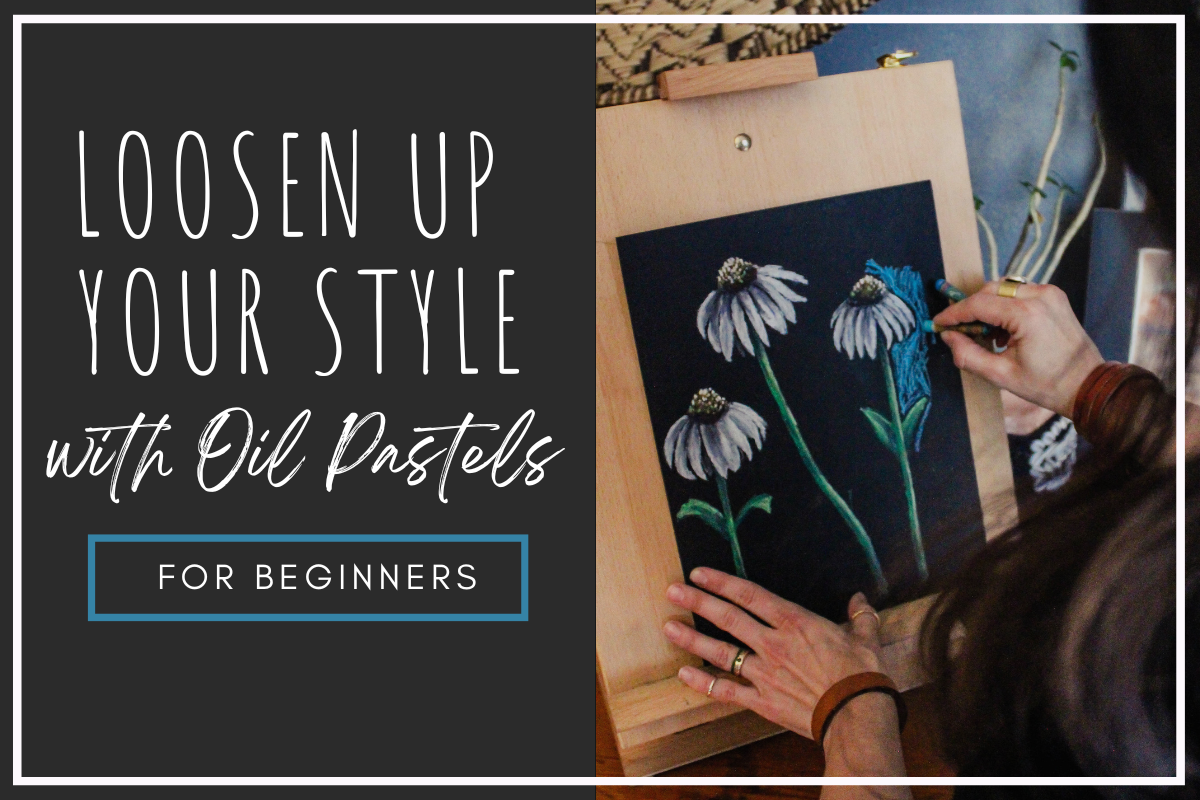
Loosen up Your Style With Oil Pastels
Oil pastels are an exciting and versatile art medium. Their convenient versatility can be the aspect of oil pastels that make them confusing to beginners. There are more than a few ways to use oil pastels. Which way is the right way?
The good news is, one of the greatest freedoms in art is that we are not bound to use the mediums in the same way others use them, or for that matter, how they’re intended to be used.
If you can get comfortable with that, then you can have endless success in oil pastel. This post is about making the most of the oil pastel’s ability to be loose, expressive and imperfect. I will introduce you to the benefits of oil pastel in its loose form. At the end of the post you can find the link to an oil pastel tutorial in the style of my children’s book illustrations.

Loosen up Your Style With Oil Pastels
This post may contain affiliate links. If you use these links to buy something I may earn a commission at no additional cost to you that allows me to continue to provide useful content. Thanks.
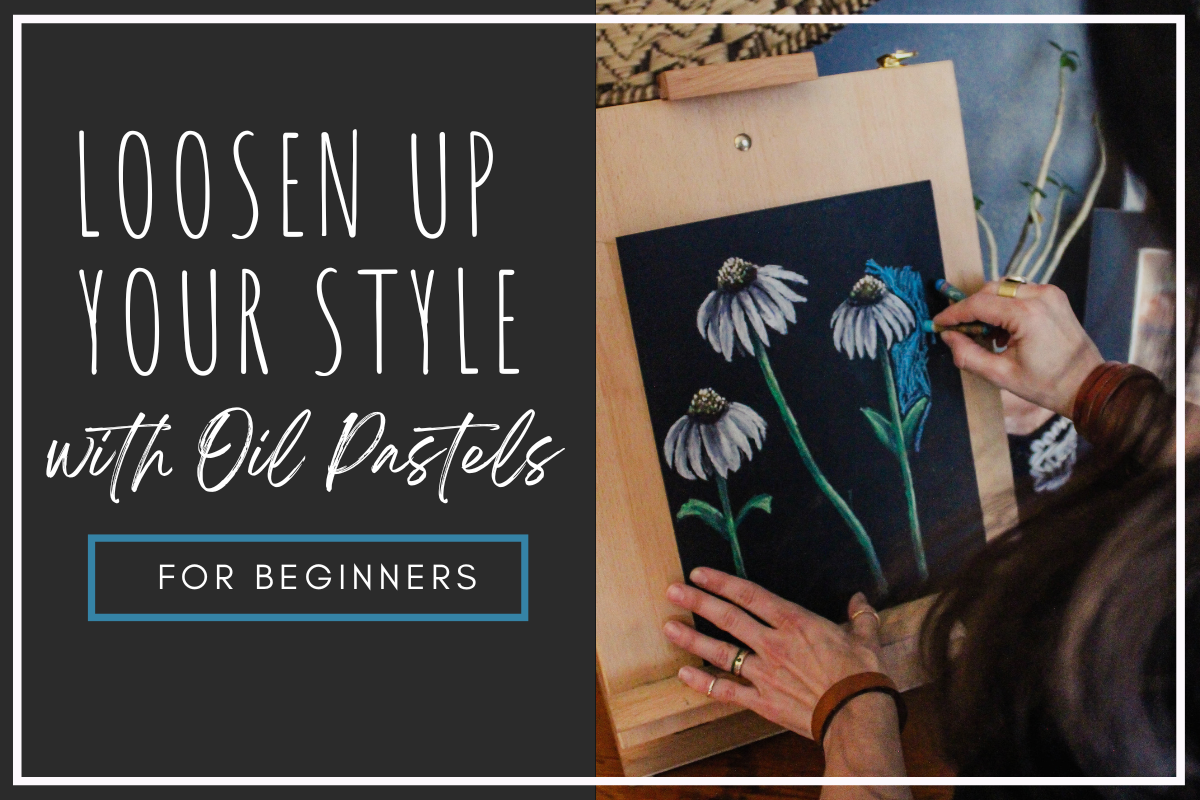
Oil pastels are an exciting and versatile art medium. Their convenient versatility can be the aspect of oil pastels that make them confusing to beginners. There are more than a few ways to use oil pastels. Which way is the right way?
The first confusing bit is that oil pastels are technically a painting medium that use the same motor-skills as drawing. They’re usually stumpy and blunt, so even though you have the same hand control that you would a pencil, adding details and precision is difficult.
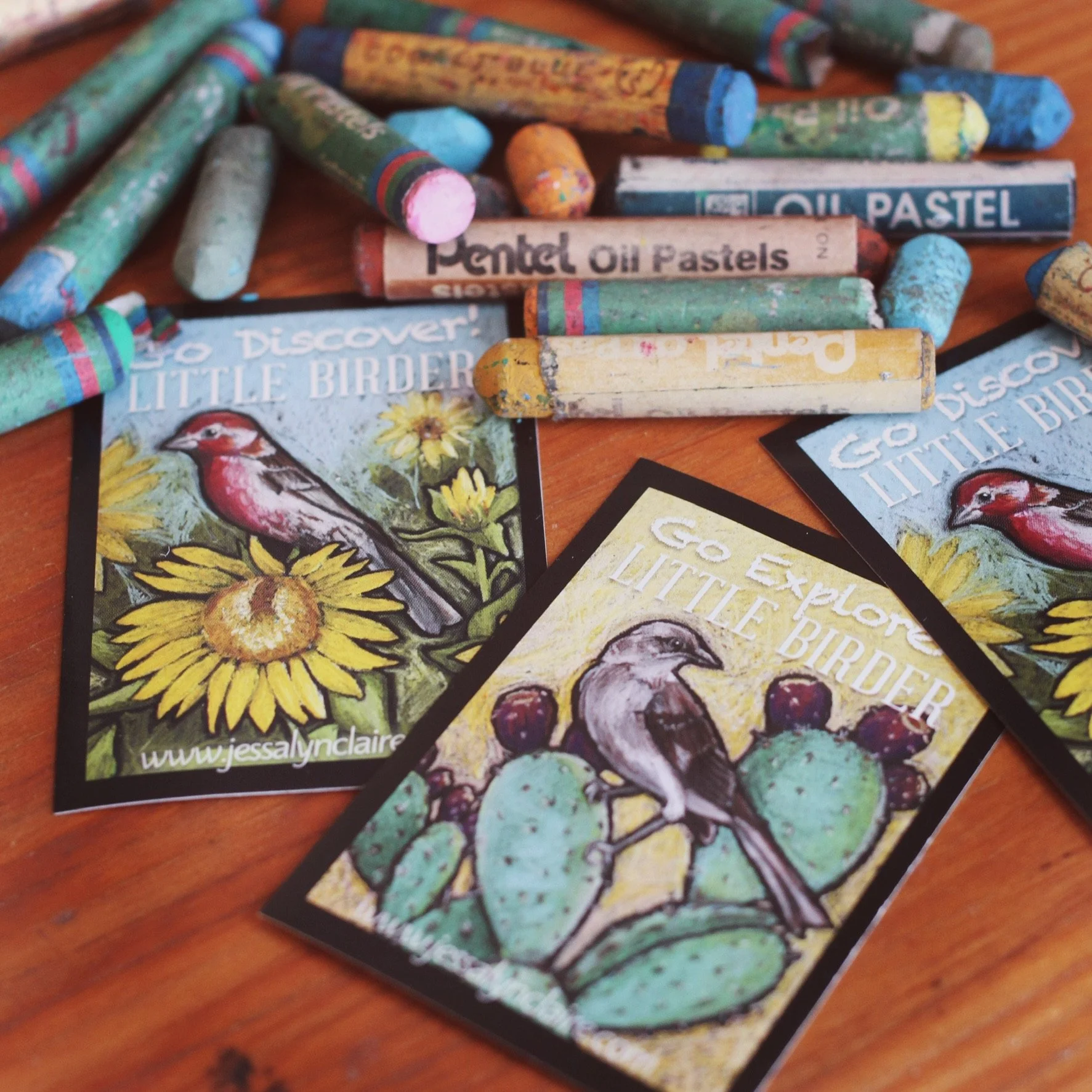
So are they for painting or drawing? I have seen many a student become very frustrated while using oil pastels for the first time. There is an inner conflict brought about by the assumption that they should be able to create precise details, but the materials won’t behave like their pencil. It can easily create the sensation that one isn’t “good” at using oil pastels and there is a temptation to revert back to the materials we know well that make us feel in control. (Okay, maybe I’m mostly talking about me.)
Any time you get the sensation that you aren’t “good” in something in art, chances are that somewhere in your head there is a “should” or “should not” bouncing around and dictating to you what your art is supposed to be in order to be “right”.
The good news is, one of the greatest freedoms in art is that we are not bound to use the mediums in the same way others use them, or for that matter, how they’re intended to be used.
If you can get comfortable with that, then you can have endless success in oil pastel. This post is about making the most of the oil pastel’s ability to be loose, expressive and imperfect. I will introduce you to the benefits of oil pastel in its loose form. At the end of the post you can find the link to an oil pastel tutorial in the style of my children’s book illustrations.
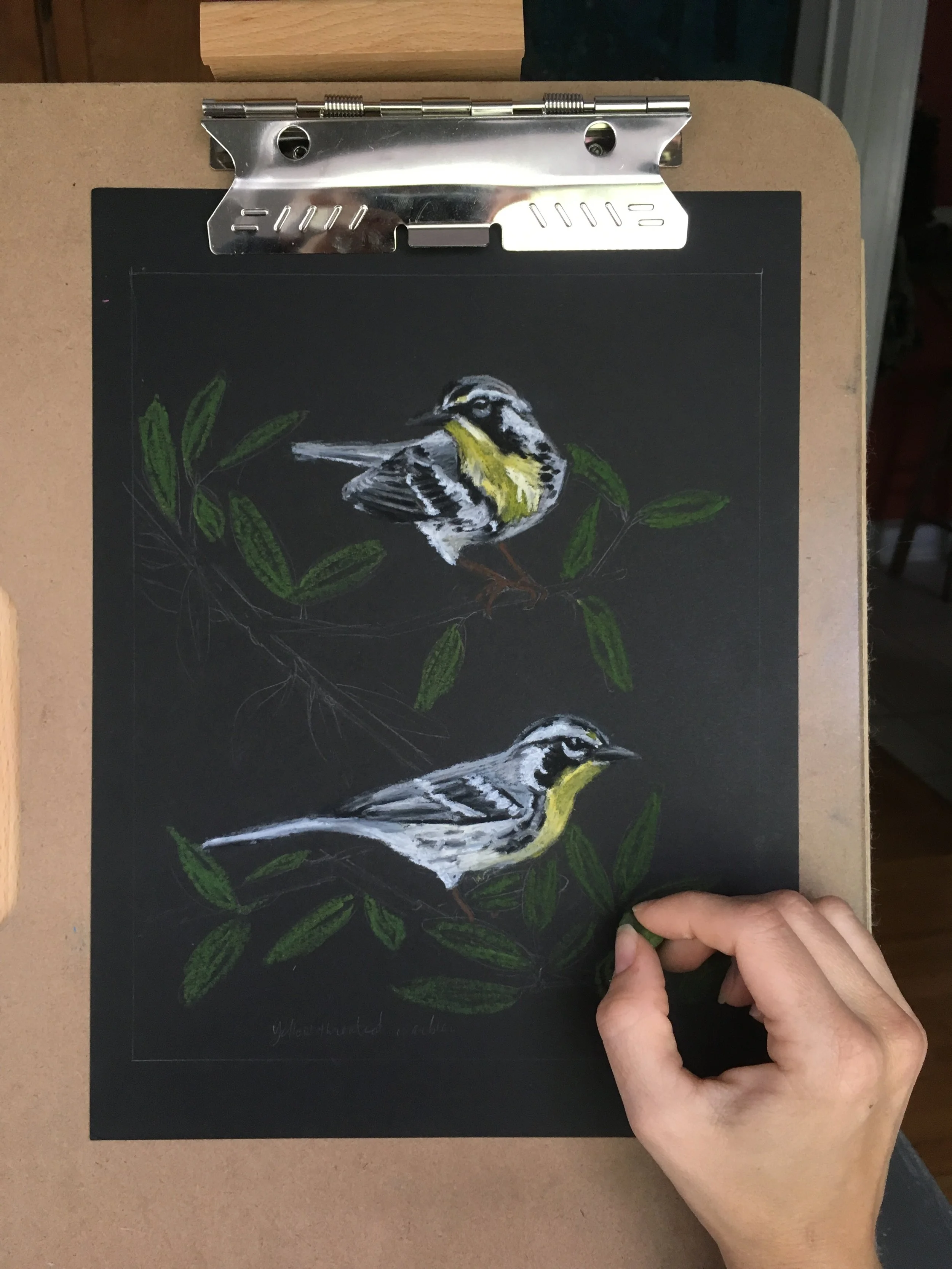
Y is for Yellow-bellied Warbler work in progress
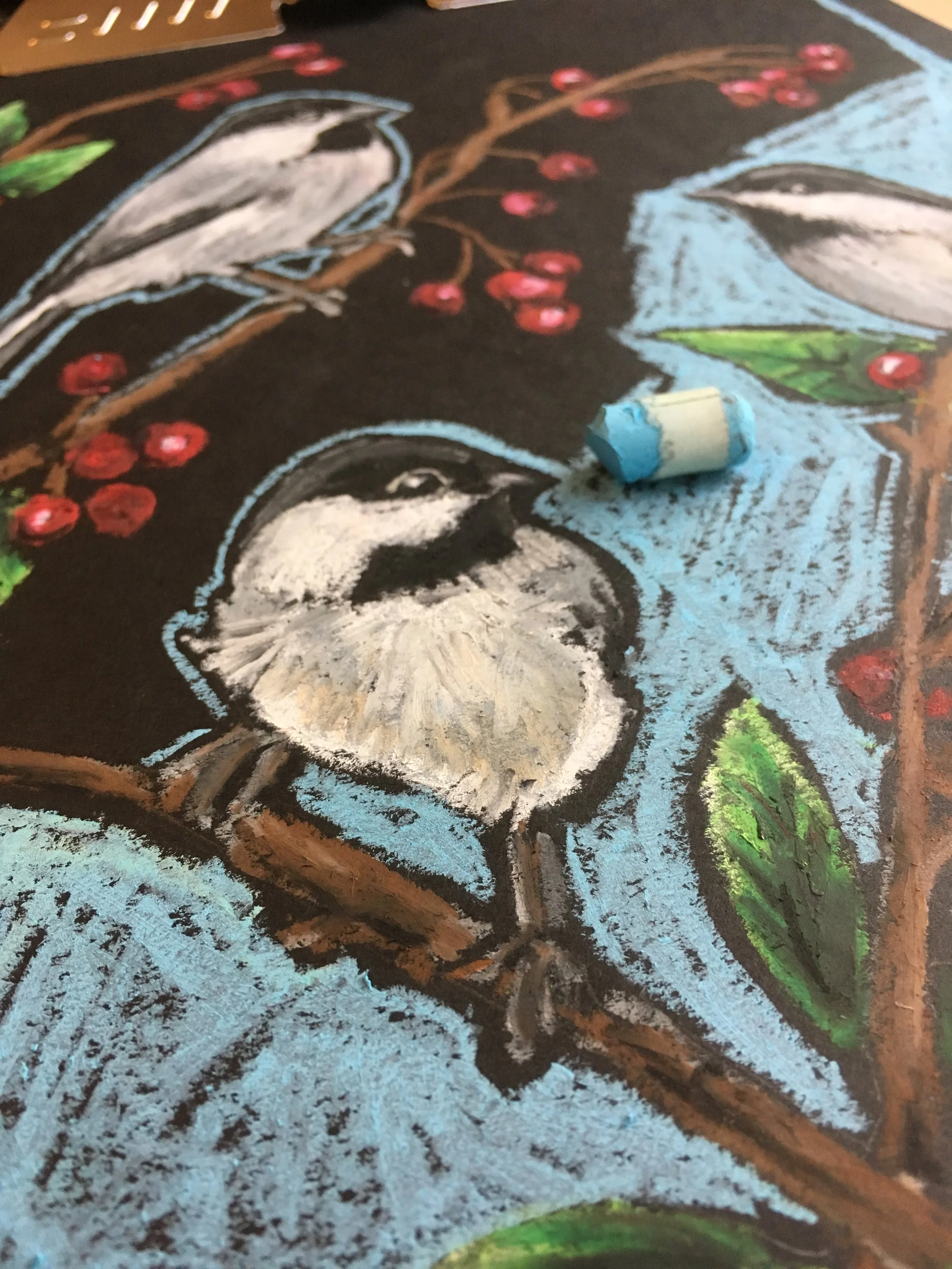
C is for Chickadee work in progress
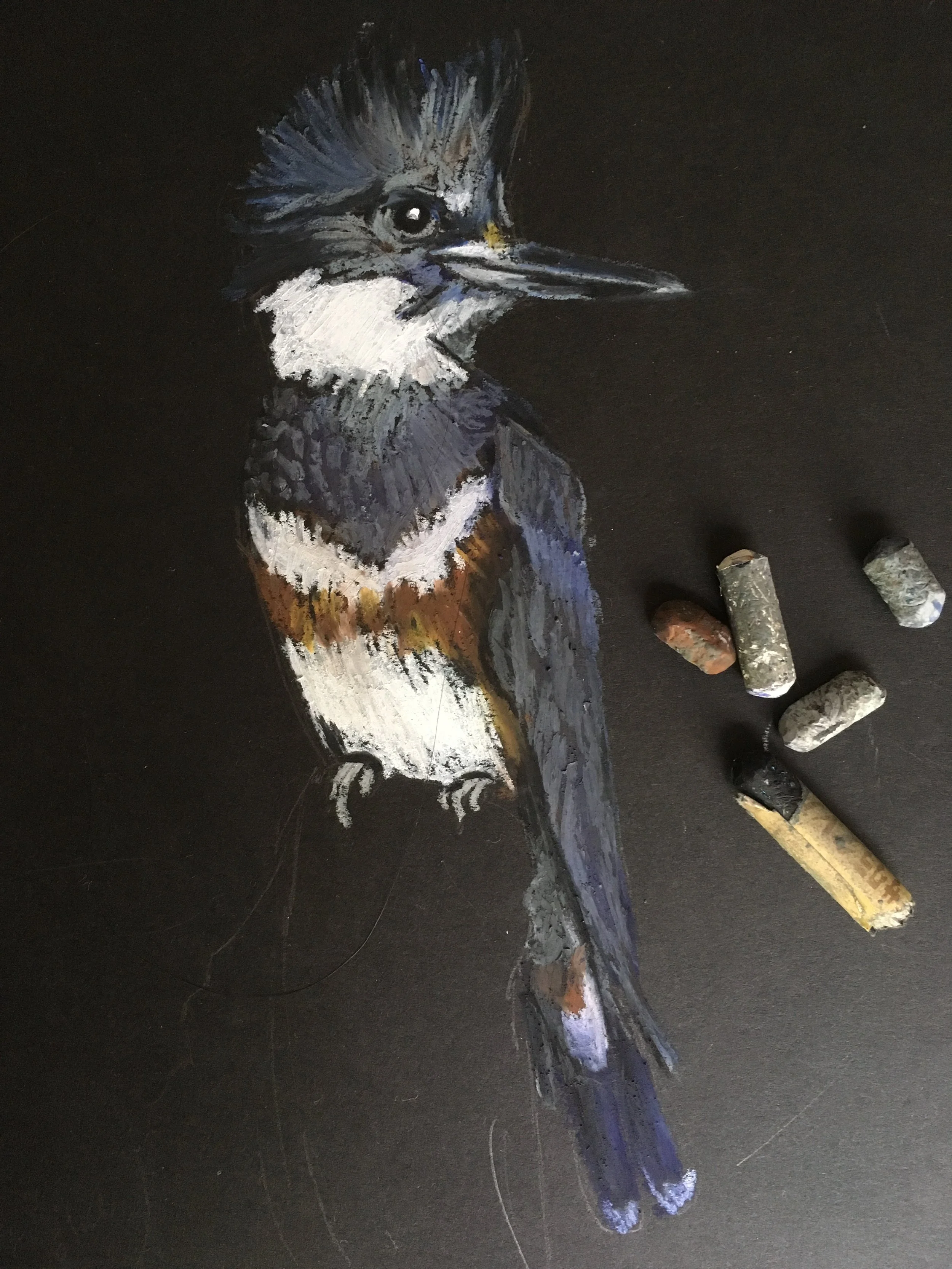
K is for Kingfisher work in progress
Fast and Loose
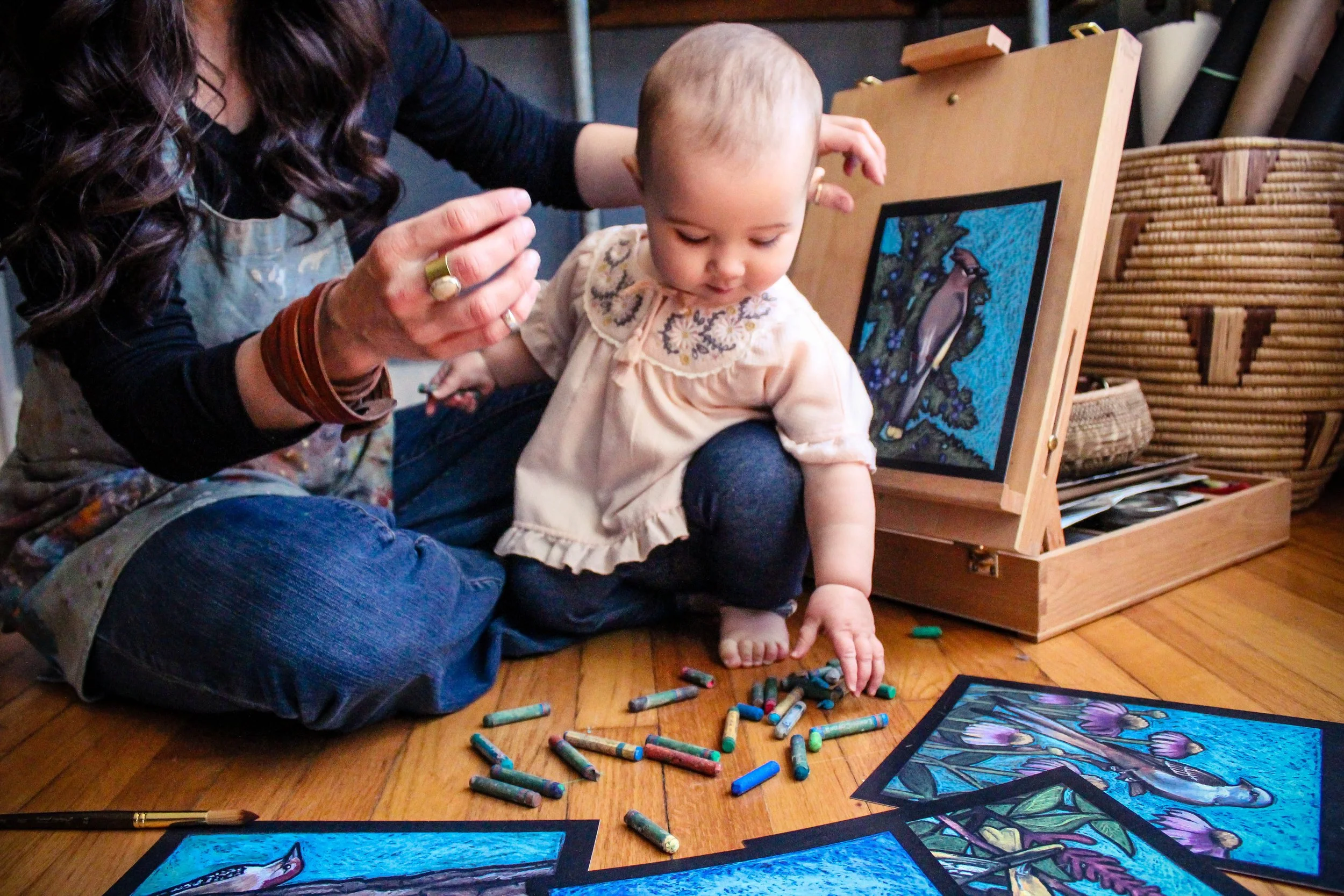

When I decided to create a children’s alphabet book about birds while at home with a new(ish) baby, I needed a medium and style that allowed for success even when illustrating with a wiggly infant on my lap. I also needed one that didn’t take hours and hours for every illustration. While researching and planning, I revisited some oil pastel animals I had done on black paper and knew I had found exactly what I was looking for.
That is how I came to illustrate Little Birder’s 26 birds in loose, bright oil pastel on black paper.
Relatively fast
Loose application
Bold illustrations
Lends itself to imperfection
I love how thick and bright the pastels cover the black paper, and I think the black paper outlines between shapes makes the colors pop and the illustrations stand out. (I mean look at this camel. What’s not to love?)

Oil Pastel Camel by Jessalyn Claire

Oil Pastel Elephant by Jessalyn Claire

Oil Pastel Horse by Jessalyn Claire

Relatively fast
Loosening up your style and attempting something similar to the examples I have shown of my developed style on black paper will also shorten the amount of time it takes to complete your artwork. The side bonus of moving toward something with more forgiveness is that it will speed up the process as you leave small imperfections and choose not to fuss over every small detail.
Troubleshooting tip: Finding yourself having a hard time not getting caught up and spending more time than you mean to in the details? Choose the area in your artwork where you want your viewer to spend the most time. Allow yourself the most time adding slow and detailed application into this area. Limit the amount of details you attempt to add into the rest of the work.
Loose application
As mentioned, Oil pastels have a variety of options for application, allowing for freedom and choice in your work. Oil pastels is one of the art mediums that can create very successful and exciting work when applied loosely.
Troubleshooting tip: Practice a loose style by picking a simple (but interesting) subject and create three versions. You can either start from precise and loosen up, or you can start with a really loose and free application, tightening up your work as you move to the second and then third versions.
Bold illustrations
Despite the fact that oil pastels vary in the thickness and opacity in their application, they all lend themselves to bright, bold results. There is flexibility to blend them in layers or apply them thickly in an impasto style, or both.
Troubleshooting tip: Do your pastels look a bit like crayon markings on the paper? I have seen students disillusioned with oil pastels only to realize that they have stopped their art too early in the process and have not built up their oil pastels enough, either with blending or with thick heavy application to make the colors pop.
If your artwork is feeling like a kids crayon drawing (and you don’t like it that way) ADD MORE. Yes, there is a point where you won’t be able to add any more without some negative effects, but if you’re having the mentioned problem, then you probably lean toward being naturally light-handed with your oil pastels. Don’t be afraid. I know it is intimidating to do something that might “mess up” the work you’ve spent time on, but so often if something doesn’t look right or “good” it is because it just isn’t finished yet.
In order to get the boldness out of the oil pastels you will want to make sure you have done one of three things:
Make sure you’ve added enough pastel that you can blend with your finger (or a solvent like baby oil) to cover the tooth of the paper. This will also take away the “crayon” effect. This would be the thinnest application of oil pastel and would likely have the most subtle effect.
Blend the oil pastel with other oil pastels until it is a soft blended surface. Layering the oil pastels will blend them into one another. There has to be enough oil pastel on the surface to be able to achieve this effect. Remember that if you are still seeing the white tooth of the paper underneath your markings (and you don’t like it) you’re not doing it wrong, you simply haven’t quite added enough layers.
Similar to the style I’ve developed on black paper, rather than slowly adding and building up oil pastel to make it thick and opaque, I simply press harder in the initial application, sometimes without layering the color. (I usually do a combination of this and the layering.) So, if you are adding marks to your artwork like this and it looks like crayon (and you don’t like it) - press harder.
Lends itself to imperfection
I find that, contrary to what you might expect, beginner artists actually lean toward being too clean and precise, and adding too much detail in their subjects. I am convinced that this is because without our own creative experience, when we view great works that are very convincing in their subject matter, we assume it is because they’ve spent more time and put more of every detail into it for us to read. In actuality, great artists are usually able to create convincing art with fewer marks and details because of how well they have come to understand things like light and shadow, form, color theory, and so on. For new artists, the tighter we are and the more detail we try to get in, without fully understanding how to do it convincingly, the less impressive and convincing our art will be.
That is why oil pastel is a great exercise in moving us away from rigidity and control, and toward loose, expressive and “imperfection” that will actually create interest and excitement in our work.
Troubleshooting Tip: To help you learn how to represent important details, try an exercise of choosing a subject matter with some degree of detail, and see how few strokes or how few shapes you can use to create a convincing representation of the subject. Try squinting your eyes while looking at your reference and only including the details you can see while squinting. Similarly you could choose a subject matter such as an apple, and attempt to paint it in the style of an impressionist artist, such as Monet.


If you’re not convinced yet, here is the thing, oil pastels are stumpy and blunt and do not lend themselves to precision details, so you’re off the hook. You can let go of perfection and set your expectations for discovery. There is a reason that I picked this style for that season of life.
If I can manage this style with a baby on my lap (who constantly tried to snack on the art materials,) then you can manage it. The key to success is to let go of perfection and enjoy the imperfection that comes with those stumpy little oil pastels.
Have you tried oil pastels yet? Comment below and let me know your experience with my favorite little artist crayons.
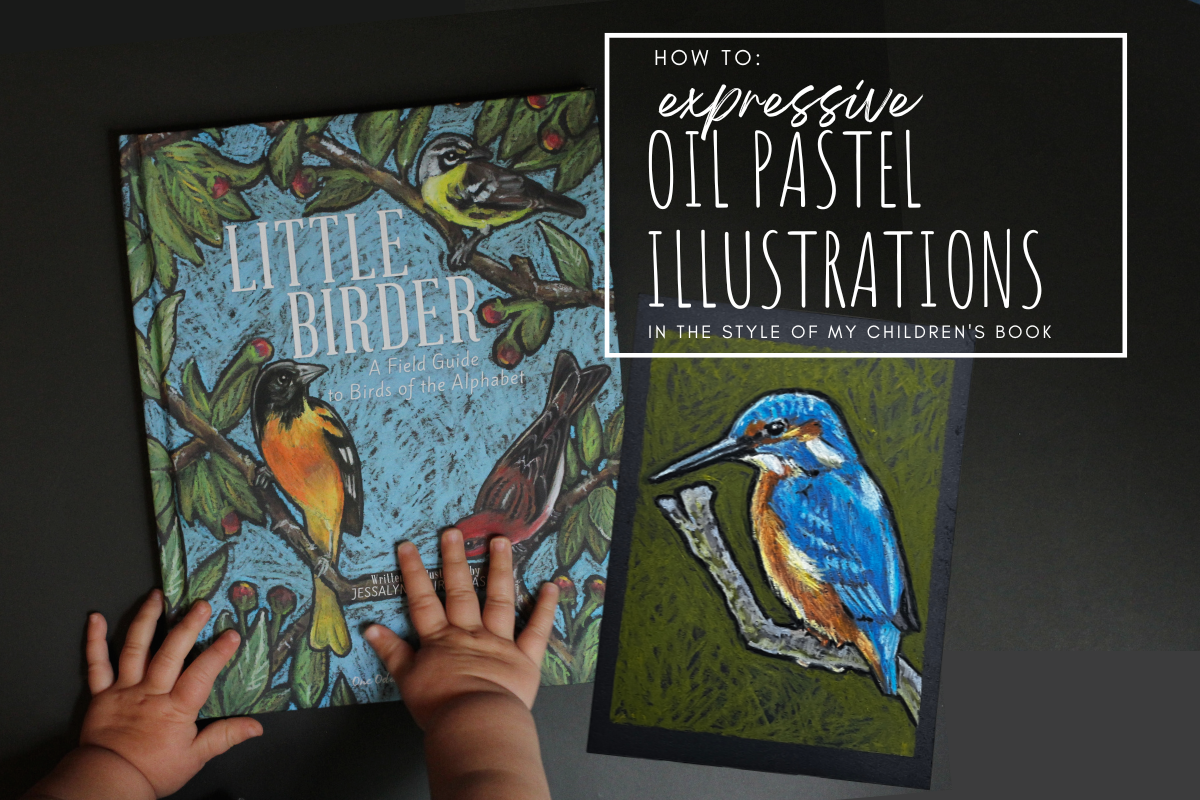
Follow this link to find the tutorial for an oil pastel painting in the style of my children’s book Little Birder: A Field Guide to Birds of the Alphabet.
Click the image below to get your own copy of my children’s book Little Birder: A Field Guide to Birds of the Alphabet.


5 Creative Christmas Gift Ideas for Kids (That Aren't Toys)
If you’re like me and you want to find a way to make your kids’ Christmas feel magical, but with a little more life enrichment and a little less nonsense— good news, a little thought on the front end can make the obligatory seasonal spending an opportunity to bring value to our kids lives.
Good news, I’ve done the thinking for you. Below are 5 creative Christmas idea (for creative kids) that aren’t toys.
5 Creative Christmas Ideas for Kids (That Aren’t Toys)
This post may contain affiliate links. If you use these links to buy something I may earn a commission at no additional cost to you. Thanks.
If you’re like me and you want to find a way to make your kids’ Christmas feel magical, but with a little more life enrichment and a little less nonsense— good news, a little thought on the front end can make the obligatory seasonal spending an opportunity to bring value to our kids lives.
Good news, I’ve done the thinking for you. Below are 5 creative Christmas idea (for creative kids) that aren’t toys.
Do you remember the lure of Christmas time as a child? I do— and it’s a fairly distinct experience as an adult. For some of us, the idealized version we formed from holiday movies wears off when we realize the magic of the season takes more work than we imagined. (So much work.)
The experience as an adult looks more like wishing the tree and trimmings would put themselves up, admitting to yourself that there will be no snow where you live, because there is never snow (and you will never wear that trendy parka you bought when the weather dropped below 70*). But the worst of all, we find out that the gifts aren’t actually brought to us from a magical (read: free) stock of infinite resources, but that you have to pay for them— shocking.
I know many of you still enjoy the slightly less magical version of Christmas as adults, and you will find a way to wear that parka even if it ends in heat stroke… but I’ve fully accepted the truth of my situation and slid gracefully into the seasonal Grinch that holiday consumerism makes me. Christmas gifting happens every year despite my attempts to wish the hubbub away. Due to this unfortunate lack of control over my surroundings, I am forced to find a happy medium between compulsory materialism and pretending that Christmas doesn’t exist.
I’ve done the research to bring you a Grinch-approved list of life-enriching gift ideas for kids. Each of these has an element of creativity, skill-building and experience-based learning built in. You get credit for being a jolly-awesome parent, while your kids get a secretly enriching experience. And the best part, in my opinion… you don’t have to let a little part of you die every time you open your wallet this holiday season.
SKIP AHEAD:
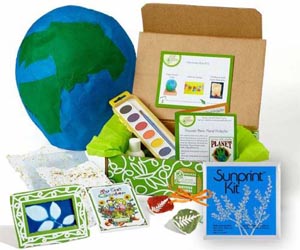

Do you like the idea of fostering an appreciation for science, nature, creativity and earth-consciousness in your kids? You could sit them down and make them watch a documentary about deforestation, or you could expose them to earth-consciousness AND cross a gift off of your list at the same time with a Green Kid Crafts nature-based STEAM kit. (I’m okay with the documentary idea too.)

These boxes are a great Christmas gift idea for your kids because each box comes complete with 4-6 art and science activities. So you’ll have a gift to put under the tree and an activity to fill some of the rest of those pesky 364 days beyond December 25th. It’s a gift that keeps on giving. With craft projects and awesome box themes like: Ecosystem Science, Environmental Activism, Wildlife Science, and Earth Science, you can help your kids learn to love the earth, art and science through creative activities— without even telling them that’s what they’re doing. You won’t have to, because they’ll gain that appreciation from the well curated activities… sneaky you.
Buy an individual box, or if you want multiple boxes that ship all at once you can purchase a pack of boxes, or go for the subscription, where a new box comes to your door monthly. The great news is that through a partnership with One Tree Planted, a tree is planted for every order placed!

This is a great gift for kids who already love birds, families that love to spend time in nature, and for parents who want to help inspire their kids to observe the natural world.
When I began my children’s book my daughter was less than a year old. It was really a project I began with her in mind, so I created an alphabet and nature book to grow with her. That is how I ended up with a book that I wrote to teach my infant the alphabet, and at four years old we’ve still barely begun to scratch the surface of it’s potential— because it is really so much more than that.
Little Birder: A Field Guide to Birds of the Alphabet is an alphabet book inspired by a field guide. With a bird for each letter of the alphabet, a two-part poem, size guide and observation prompts you can customize your reading experience to fit the age of your child. As your kids grow you can begin to include more of each page in your reading time. Expose the youngest children to the alphabet and bright, stimulating illustrations. By the time your child is reading, they will be ready to take it all in— including the prompt question at the bottom of each page that helps develop their observation skills.

For the 4+ age group, add to your gift the Little Birder Birdwatching Journal and a set of binoculars, and you have a gift ready to inspire your little ones to get excited about observation. The Birdwatching Journal has ready-to-fill sections for guiding your little one’s bird observations. Each page has a note section, size chart, a place for the date and location, and each corresponding page has a place for sketching. So you all can take a look at the bird drawing lesson in the back of the Little Birder children’s book (it is also in the back of the journal) and practice those drawing skills in the pages of the birdwatching journal.
(Keep in mind, at the time of writing, I no longer sell my book through Amazon or other large retail book stores like Barnes & Noble. So don’t be like me and wait to order this gift until the very last minute. Plan for small shop turnaround times, and consider expedited shipping if you find yourself close to the day.)
(If you have a child who is really into birds, keep reading and learn more about my most popular art class for kids—Drawing Realistic Birds on Outschool.com!)

Give your creative kid the gift of confidence. The next gift bundle on the list is a combination of cool art supplies AND a set of lessons on how to use them.
I was recognized as an artistic child, and so as I remember it, I received art supplies at every single gifting occasion. I admit that there were many moments when I was hoping for some overpriced plastic object, and so opening a box of artist quality colored pencils left me a little… disillusioned— but that might’ve been because to some degree, I didn’t know what to do with them. I was artistic, but not universally talented. I was just as clueless as any ten year old who found themself with a 324 pack of Prismacolor pencils. So while I really appreciated (and still used) some of those same art supplies way later in my artistic career, through my own experience I realized that a more wholistic version of this very thoughtful gift ritual would be the gift of supplies and the guidance on how to skillfully use them.
Art lessons

I teach art on a platform called Outschool. If you haven’t heard of it yet, you’re welcome in advance. Your kids can learn ANYTHING on Outschool. I teach a number of group art classes for kids on drawing and a variety of different mediums, like oil-pastel or watercolor, but there is also the option of private 1:1 classes where we can focus on the interests, skills and skill-level of your artistic child.
You can sign your child up for a single private 1:1 lesson here, or a set of 5 private lessons at a lower cost per lesson here. (available for ages 6-18)

Some of my favorite group class options are:
Little Birders- Expressive Oil Pastel Bird Painting (ages 9-14)
Kids with Oil Pastels (ages 4-6)
Little Birders- Watercolor Birds - Sketch & Paint - Nature Journal Techniques (ages 8-12)
Art Supplies
Here is a list of the fun art supplies that correspond with the above classes (and a few more.)
Oil Pastels - Oil pastels are the artist’s crayon, so elevate your kids artwork by putting the crayons away and give them a real artist’s medium. It will feel like a natural transition. (Click here for a fun art tutorial for your young kids learning to use oil pastels)
Black mixed media paper - In my classes, I teach kids how to create beautiful artworks in oil pastel on black paper, but oil pastels work great on white paper as well.
Washi tape or painter’s tape - for taping a clean edge on their artwork
Watercolor set - There are lots of options for watercolors, but here are three levels of quality to choose from that are all great for students. Cheap, Medium, Higher
Watercolor paper - Opt for a pad of watercolor paper, or a watercolor journal that will allow you to have all of their work together in one place.
Watercolor brushes - I do no recommend purchasing expensive art brushes, but I do recommend purchasing decent brushes that are the right size. For children I recommend large round brushes like the ones linked here. Small brushes are not east to use with watercolor paintings, even for adults. Opt for something that will hold a lot of water and will be faster for filling the page.
*As an Amazon Associate I earn from qualifying purchases.

4. Real Tools for real skills

There are plenty of imaginative play skill sets out there, but people are getting smart and realizing that kids don’t need pretend tools — they just need kid-sized, kid-friendly version of functional tools and some supervised practice.
When I was younger I spent a lot of time in rural parts of an African country and one of the memories that strikes me most, now that I am a mother, is the memories of children under the age of two, sitting around adeptly cutting vegetables out of their hand with the equivalent of a pairing knife. We’re conditioned to think that we need to keep young kids away from sharp things because they don’t have the ability to be near them safely, but that may be because we don’t give them the opportunity to learn to be near them safely. That is why I absolutely love these next gift suggestions that all fall in the category of real tools for little hands. These are some of the functional tools and sets that help your child enter the world of serious making, without the fear of what could go wrong with letting them get their hands on full-fledged power tools.
A few cool tools

*As an Amazon Associate I earn from qualifying purchases.
1.First up is this 4-in-1 Woodshop Carpentry set. It seriously comes with a functional lathe, jigsaw, drill press, sander and even the safety goggles. Is that not the coolest things you’ve ever seen? I really, really want one. You can also grab some extra wood sheets, sanding disks and tools, or lathe pieces.
2.Next would be a this real action power drill made for little hands. There is even a pink power drill for the DIY princess in your life.
3.There are tons of options out there, but last on my list are these awesome soapstone carving kits if you’re more interested in unplugged hobby tools. Choose between different animal figurines to carve, like an elephant, bear, or go for a set of two like this dolphin and turtle set. All of the supplies you need are included. The kit contains hand-cut Brazilian soapstone shapes, a kid-safe carving file, two grades of sandpaper, polishing wax for a shiny finish, and a buffing cloth.
5. Digital Tools for Real Artists
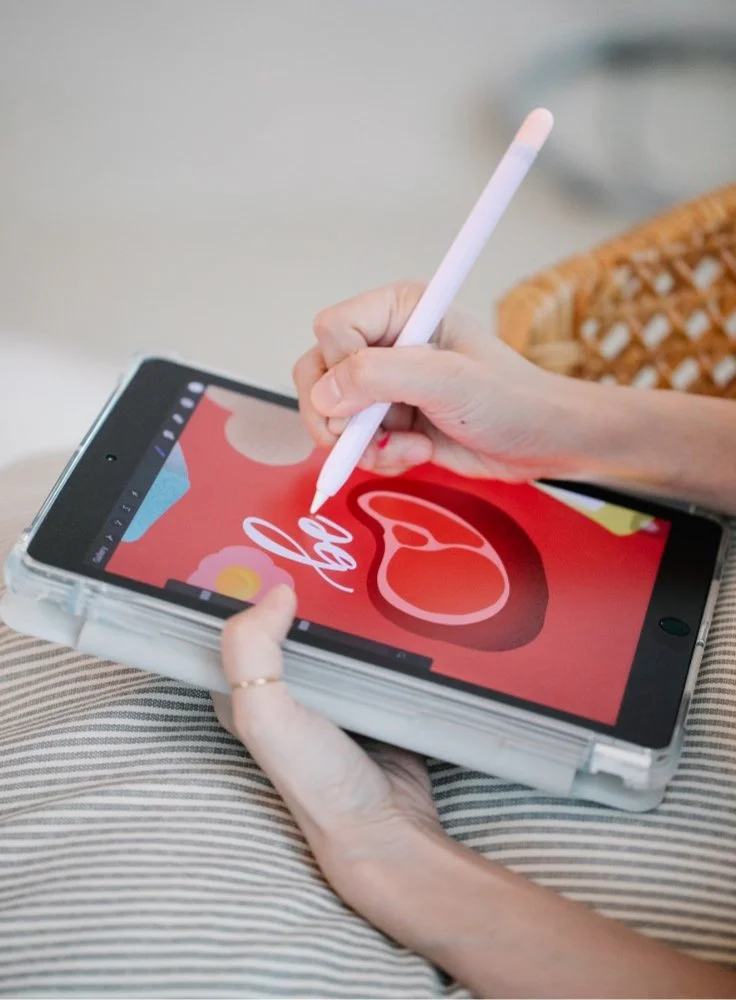
We all feel a little different about kids and technology. I’m fairly wary of it, I admit. I remember being a middle school girl on messenger… not an enriching life experience. I am also one of those resistant strands of human who mumbles under their breath about “progress” and “the good old days” while also scrolling through cat memes. However, being an artist-mom, when my daughter begged me to let her take a turn using my digital pencil on Procreate, the drawing app I use for teaching art lessons, I had to acknowledge the obvious value of early exposure to that skill. She absolutely adores it, and it has genuinely been a worthwhile enriching experience for her.
That is why I am finishing my list with the gift of the Procreate app and an accompanying digital pencil for an iPad. Obviously, you will need an iPad for this gift, so if you do not already have an iPad in your family, that would be the place to start. You can easily find older or refurbished iPads at affordable prices. You don’t need the newest model to make this gift work.

The List
Apple Pencil- When looking for an Apple Pencil, you can find a 1st Generation and a 2nd Generation version. You will want to check the list below and do some research about which pencil is compatible with your iPad.
Procreate App- There are other digital art softwares out there, but Procreate has taken the digital art world by storm. It is user-friendly, CHEAP, ever-expanding and unbelievably diverse. Find the Procreate software in the app store for $9.99.
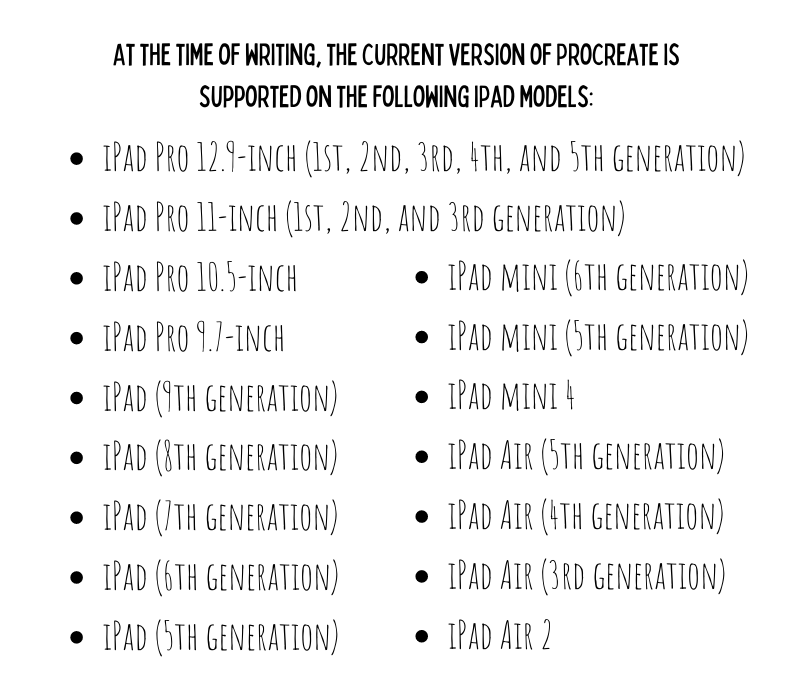
Ipad - Find an iPad that suits your budget. Below I have listed the compatible versions of the iPad from the Procreate website. You will have to do your own research to make sure you’re getting something that will be able to run the Procreate software.
Extras- All you really need to get started are the three things above, but if you get excited about this gift there are tons of Apple pencil or iPad accessories that you can wrap up separately. (All of these are clickable.)
Cute cat pencil cover
All kinds of cute covers (pay attention to which pencils they fit)
Check out these digital mandalas drawn and colored by my four year old. Yeah, you read that right. Four.




Don’t feel very tech savvy? Don’t worry, you don’t have to teach them yourself.
Try out my private Procreate lessons that are tailored to your child’s needs and interests to help your kids get started using their new gift. Follow this link or click the photo to visit my classes on Outschool.com.
Fear not!
Don’t be fooled by the advanced technology. Your littlest little ones are developing all of the motor skills used for writing and drawing, so just because they won’t be mastering the technology or even the art skills right away, does not mean there is no value to introducing them to the digital medium. This creative software is a new art medium just like any crayon, pencil or paint they try for the first time (and frankly it is probably their future.) In the same way that no one expects a child to master their painting skills at four just because someone put some tempura paint in their hands, you can set the expectation for their output in line with their developmental stage and think of this as a first exposure. Don’t think about it in terms of their knowledge or skill deficit, but rather as the introduction to another new creative experience that they will build on as they grow.
With the right supervision, everything they can do on paper, they can do digitally. It is boundless creativity and a great way to practice their motor-skills with smaller environmental impact (so much less paper waste.)

Oil pastels are an exciting and versatile art medium. Their convenient versatility can be the aspect of oil pastels that make them confusing to beginners. There are more than a few ways to use oil pastels. Which way is the right way?
The good news is, one of the greatest freedoms in art is that we are not bound to use the mediums in the same way others use them, or for that matter, how they’re intended to be used.
If you can get comfortable with that, then you can have endless success in oil pastel. This post is about making the most of the oil pastel’s ability to be loose, expressive and imperfect. I will introduce you to the benefits of oil pastel in its loose form. At the end of the post you can find the link to an oil pastel tutorial in the style of my children’s book illustrations.