Recent Blog Posts

All Blog Posts
Looking for something specific? Try searching here.

Sparking Creativity | Kids with Oil Pastels | Art Tutorial
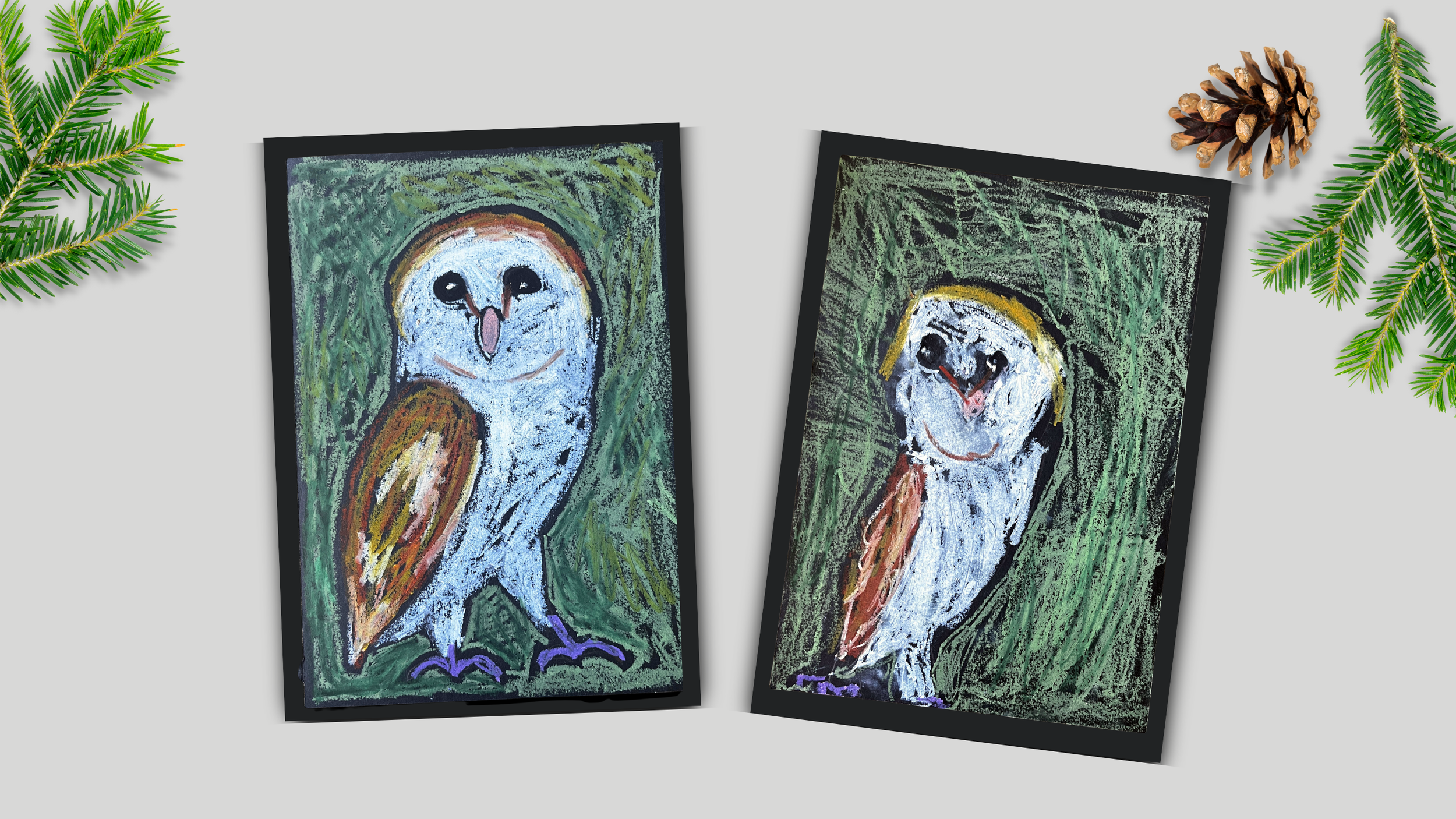
This style is intentionally imperfect but the defining features of the bright oil pastels, with heavy black outlines, created by expressive markings on black paper is like an elevated version of the crayon scribbles we all know and love. It is amazing how this small change from crayons to oil pastels, white to black paper, and some intentional black outlines will create stunningly eye-catching artwork from the same little hands that brought you that lovely chicken-dog blob that has been hanging on the fridge since it came home from school on Father’s Day.
Sparking Creativity
Kids with Oil Pastels- Fun Winter Owl Art Tutorial
This post may contain affiliate links. If you use these links to buy something I may earn a commission at no additional cost to you that allows me to continue to provide useful content. Thanks.
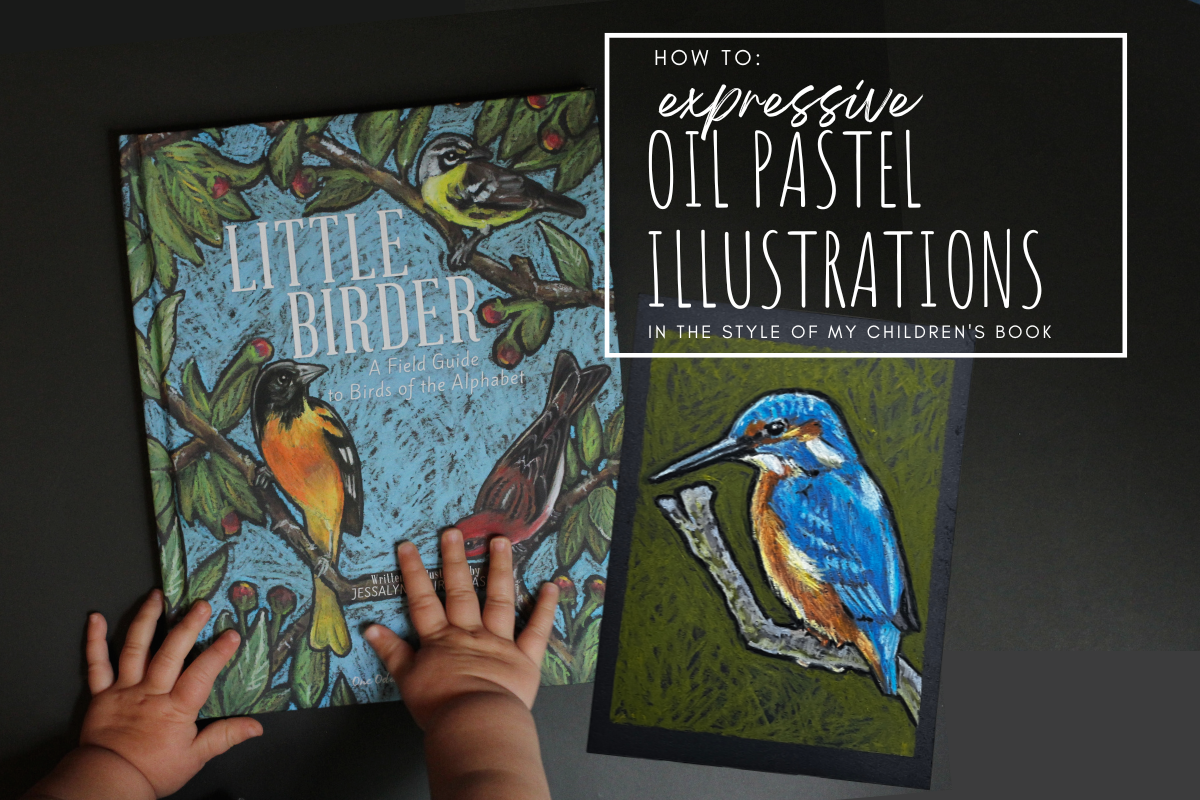
I have been familiar with oil pastels for years, but I really found a new appreciation for their potential during the creation of my children’s book, Little Birder: A Field Guide to Birds of the Alphabet. It was a mound of work to illustrate a bird painting for each letter of the alphabet, a task which I often did with my infant daughter tucked under an arm on my lap. The situation called for a medium and style that suited a one-handed illustrator, strapped to a wiggly baby making continual attempts to eat the art materials. That exciting scenario is where I first began to appreciate the forced imperfection of the stubby little crayon-like colors with a mind of their own.

Fast forward a few years and I still love the signature style of the illustrations in my book, plus I now have an artistic four year old. One day it struck me, this is a PERFECT art project for small hands and developing motor skills. The style is intentionally imperfect but the defining features of the bright oil pastels, with heavy black outlines, created by expressive markings on black paper is like an elevated version of the crayon scribbles we all know and love. It is amazing how this small change from crayons to oil pastels, white to black paper, and some intentional black outlines will create stunningly eye-catching artwork from the same little hands that brought you that lovely chicken-dog blob that has been hanging on the fridge since it came home from school on Father’s Day.
WANT TO READ AHEAD?
JUMP TO:
MATERIALS
The material needs are few for this project. The good news is that once you’ve purchased the parts, your child can continue to enjoy the surprising and satisfying outcomes of putting the bright pastels on black paper. Even without following a drawing or tutorial, those everyday scribbles can have a very modern artist-like feel.
Pencil and Eraser
Optional:
Washi Tape or Painter’s Tape for creating a clean border around the artwork
Kids' Apron to protect clothing
Brown paper roll, or something to protect table or working surface
Please note: Oil Pastels are made with… you guessed it, oil. Unlike the art materials made for children, these are not made to be washed out. If this is a concern for you, you can always opt for a water-soluble set like this and will be more likely to get it out of fabrics.
*As an Amazon Associate I earn from qualifying purchases.
Let’s begin!

Step One: Pencil Sketch
Follow the steps below to sketch your owl drawing onto the black paper. You don’t have to be too cautious because the oil pastel will mostly cover any pencil marks.

Step Two: Add Oil Pastel - Painting the owl
After you have your pencil sketch ready to guide you, you’re ready to add color with oil pastels. If you would like to use the same colors as the example find a selection of these colors: white, various browns, orange, yellow, purple, various greens and a black. Feel free to get creative with your background or details.
Optional: I really like to tape the edges of the paper so that the child can freely paint right up to the border, but when the tape is removed you’re left with a very satisfying sharp edge to the lovely work of art. If you decide to do this, make sure you “unsticky” the tape a bit by sticking it to your clothing a few times before putting it onto the paper. Washi tape is less likely to damage the paper as you remove it, but you make the judgement call. When removing the tape, pull down slowly at a slight angle outward rather than straight down.

Start adding color by taking the white oil pastel and tracing a border around each of the markings on the face. Trace around the eyes and beak, leaving the V shaped marking in the middle of the face. Trace right up next to the outline of the head and inside the body, leaving the wing black. This includes the two triangular leg shapes which will also be solid white.
After creating this border to guide your painting, freely add white oil pastel in scribbling motions into the areas that will be white. Be sure to let some of the black paper show through and don’t paint over any of the features of the face or other parts of the body. It is better to stop far away and come back later than to accidentally go too far.
Next, take a yellow or a pink oil pastel and paint the almond shaped beak, trying to stay within the line.
For the eyes, you can either leave the black of the paper showing and add white oil pastel right up to the outline of the eye to define a black circle, or you can fill in the eye with the black oil pastel. The black oil pastel will cover all other colors of oil pastel, so it is great for cleaning up that black eye circle if you happened to accidentally go too far with the white. To finish the eye, add a white spot on either side of the eye for the reflection, keeping it to the same side of each eye.
Take a brown oil pastel and draw the two lines that run from the inside of the eye down to the beak that create a sort of V-shape. Then add a curved line a small distance from the bottom of the beak to separate the shape of the white face from the white body.
With a lighter brown, gold, or even a light orange color, trace the shape of the wing, defining it from the white of the body with a black outline. Add a light layer of this color inside the wing and then add the darker brown to the upper and lower portions of the wing on top of the first color. Add a few strokes of white in a few spots in the middle portion of the wing.
Take the same two colors and add a “headband” of color to the top of the owl’s head. You can overlap with the white a little to blend the colors.
Choose a color for the feet. I liked the pop of purple against the other colors and the green background, but you can select something true to real life if you prefer it. Draw over the sketch of the feet with your oil pastel however thick or thin you find appealing.
Step Three:Add Oil Pastel- The Background
Remember that the crux of our style is the heavy black outlines that separate large elements from one another in the painting. This can be hard for younger children, as it is a bit like having to stay inside the lines and requires somewhat matured motor skills. You can assist by tracing their owl with the background color and leaving a black outline that is a safe distance away from their work, this allows them to go wild up to that line without as much risk of overlap. Then take the green colors (or bright blue could be nice too) and start filling in the background to look like the spiky needles of a pine or evergreen. To mimic the original style, try to leave some black showing through the marks rather than covering the background surface in oil pastel.
Again, the black oil pastel will cover the other pastels, so you could alternatively let your child try to leave the border and fill the background on their own and then help them redefine the black border anywhere that it has disappeared or needs to be made bolder. You can also clean up the black outlines within the owl in areas like around the wing, and around the beak if you choose to.

AND DONE!
Add some initials or signature, peel the tape and you’re done! Like oil paint, oil pastels take a long time to fully cure so your art will stay somewhat sticky and smear-able. If you would like to spray your art to seal it, try a couple of layers of a matte fixative like this one. (Follow the directions! Adults only.)

Click the image to sign your child up for an oil pastel lesson with me on Outschool.com!


Free Art Class for Kids | How to Draw Realistic Birds on Outschool - Part Two: Guided Drawing Video
Do you have a child that wants to be an artist or learn to draw? This is the guided-drawing video of a Black-capped Chickadee. A free video lesson from my class How to Draw Realistic Birds (and Think Like an Artist) on Outschool.com
If you haven’t watched the part-one learning video, find it here.
want a FREE DRAWING LESSON? Find the video below.
Do you have a child that wants to be an artist or learn to draw? This is the guided-drawing video of a Black-capped Chickadee. A free video lesson from my class How to Draw Realistic Birds (and Think Like an Artist) on Outschool.com
If you haven’t watched the part-one learning video, find it here.

5 Creative Christmas Gift Ideas for Kids (That Aren't Toys)
If you’re like me and you want to find a way to make your kids’ Christmas feel magical, but with a little more life enrichment and a little less nonsense— good news, a little thought on the front end can make the obligatory seasonal spending an opportunity to bring value to our kids lives.
Good news, I’ve done the thinking for you. Below are 5 creative Christmas idea (for creative kids) that aren’t toys.
5 Creative Christmas Ideas for Kids (That Aren’t Toys)
This post may contain affiliate links. If you use these links to buy something I may earn a commission at no additional cost to you. Thanks.
If you’re like me and you want to find a way to make your kids’ Christmas feel magical, but with a little more life enrichment and a little less nonsense— good news, a little thought on the front end can make the obligatory seasonal spending an opportunity to bring value to our kids lives.
Good news, I’ve done the thinking for you. Below are 5 creative Christmas idea (for creative kids) that aren’t toys.
Do you remember the lure of Christmas time as a child? I do— and it’s a fairly distinct experience as an adult. For some of us, the idealized version we formed from holiday movies wears off when we realize the magic of the season takes more work than we imagined. (So much work.)
The experience as an adult looks more like wishing the tree and trimmings would put themselves up, admitting to yourself that there will be no snow where you live, because there is never snow (and you will never wear that trendy parka you bought when the weather dropped below 70*). But the worst of all, we find out that the gifts aren’t actually brought to us from a magical (read: free) stock of infinite resources, but that you have to pay for them— shocking.
I know many of you still enjoy the slightly less magical version of Christmas as adults, and you will find a way to wear that parka even if it ends in heat stroke… but I’ve fully accepted the truth of my situation and slid gracefully into the seasonal Grinch that holiday consumerism makes me. Christmas gifting happens every year despite my attempts to wish the hubbub away. Due to this unfortunate lack of control over my surroundings, I am forced to find a happy medium between compulsory materialism and pretending that Christmas doesn’t exist.
I’ve done the research to bring you a Grinch-approved list of life-enriching gift ideas for kids. Each of these has an element of creativity, skill-building and experience-based learning built in. You get credit for being a jolly-awesome parent, while your kids get a secretly enriching experience. And the best part, in my opinion… you don’t have to let a little part of you die every time you open your wallet this holiday season.
SKIP AHEAD:
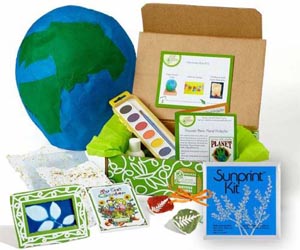

Do you like the idea of fostering an appreciation for science, nature, creativity and earth-consciousness in your kids? You could sit them down and make them watch a documentary about deforestation, or you could expose them to earth-consciousness AND cross a gift off of your list at the same time with a Green Kid Crafts nature-based STEAM kit. (I’m okay with the documentary idea too.)

These boxes are a great Christmas gift idea for your kids because each box comes complete with 4-6 art and science activities. So you’ll have a gift to put under the tree and an activity to fill some of the rest of those pesky 364 days beyond December 25th. It’s a gift that keeps on giving. With craft projects and awesome box themes like: Ecosystem Science, Environmental Activism, Wildlife Science, and Earth Science, you can help your kids learn to love the earth, art and science through creative activities— without even telling them that’s what they’re doing. You won’t have to, because they’ll gain that appreciation from the well curated activities… sneaky you.
Buy an individual box, or if you want multiple boxes that ship all at once you can purchase a pack of boxes, or go for the subscription, where a new box comes to your door monthly. The great news is that through a partnership with One Tree Planted, a tree is planted for every order placed!


This is a great gift for kids who already love birds, families that love to spend time in nature, and for parents who want to help inspire their kids to observe the natural world.
When I began my children’s book my daughter was less than a year old. It was really a project I began with her in mind, so I created an alphabet and nature book to grow with her. That is how I ended up with a book that I wrote to teach my infant the alphabet, and at four years old we’ve still barely begun to scratch the surface of it’s potential— because it is really so much more than that.
Little Birder: A Field Guide to Birds of the Alphabet is an alphabet book inspired by a field guide. With a bird for each letter of the alphabet, a two-part poem, size guide and observation prompts you can customize your reading experience to fit the age of your child. As your kids grow you can begin to include more of each page in your reading time. Expose the youngest children to the alphabet and bright, stimulating illustrations. By the time your child is reading, they will be ready to take it all in— including the prompt question at the bottom of each page that helps develop their observation skills.

For the 4+ age group, add to your gift the Little Birder Birdwatching Journal and a set of binoculars, and you have a gift ready to inspire your little ones to get excited about observation. The Birdwatching Journal has ready-to-fill sections for guiding your little one’s bird observations. Each page has a note section, size chart, a place for the date and location, and each corresponding page has a place for sketching. So you all can take a look at the bird drawing lesson in the back of the Little Birder children’s book (it is also in the back of the journal) and practice those drawing skills in the pages of the birdwatching journal.
(Keep in mind, at the time of writing, I no longer sell my book through Amazon or other large retail book stores like Barnes & Noble. So don’t be like me and wait to order this gift until the very last minute. Plan for small shop turnaround times, and consider expedited shipping if you find yourself close to the day.)
(If you have a child who is really into birds, keep reading and learn more about my most popular art class for kids—Drawing Realistic Birds on Outschool.com!)

Give your creative kid the gift of confidence. The next gift bundle on the list is a combination of cool art supplies AND a set of lessons on how to use them.
I was recognized as an artistic child, and so as I remember it, I received art supplies at every single gifting occasion. I admit that there were many moments when I was hoping for some overpriced plastic object, and so opening a box of artist quality colored pencils left me a little… disillusioned— but that might’ve been because to some degree, I didn’t know what to do with them. I was artistic, but not universally talented. I was just as clueless as any ten year old who found themself with a 324 pack of Prismacolor pencils. So while I really appreciated (and still used) some of those same art supplies way later in my artistic career, through my own experience I realized that a more wholistic version of this very thoughtful gift ritual would be the gift of supplies and the guidance on how to skillfully use them.
Art lessons
I teach art on a platform called Outschool. If you haven’t heard of it yet, you’re welcome in advance. Your kids can learn ANYTHING on Outschool. I teach a number of group art classes for kids on drawing and a variety of different mediums, like oil-pastel or watercolor, but there is also the option of private 1:1 classes where we can focus on the interests, skills and skill-level of your artistic child.
You can sign your child up for a single private 1:1 lesson here, or a set of 5 private lessons at a lower cost per lesson here. (available for ages 6-18)

Some of my favorite group class options are:
Little Birders- Expressive Oil Pastel Bird Painting (ages 9-14)
Kids with Oil Pastels (ages 4-6)
Little Birders- Watercolor Birds - Sketch & Paint - Nature Journal Techniques (ages 8-12)
Art Supplies
Here is a list of the fun art supplies that correspond with the above classes (and a few more.)
Oil Pastels - Oil pastels are the artist’s crayon, so elevate your kids artwork by putting the crayons away and give them a real artist’s medium. It will feel like a natural transition. (Click here for a fun art tutorial for your young kids learning to use oil pastels)
Black mixed media paper - In my classes, I teach kids how to create beautiful artworks in oil pastel on black paper, but oil pastels work great on white paper as well.
Washi tape or painter’s tape - for taping a clean edge on their artwork
Watercolor set - There are lots of options for watercolors, but here are three levels of quality to choose from that are all great for students. Cheap, Medium, Higher
Watercolor paper - Opt for a pad of watercolor paper, or a watercolor journal that will allow you to have all of their work together in one place.
Watercolor brushes - I do no recommend purchasing expensive art brushes, but I do recommend purchasing decent brushes that are the right size. For children I recommend large round brushes like the ones linked here. Small brushes are not east to use with watercolor paintings, even for adults. Opt for something that will hold a lot of water and will be faster for filling the page.
*As an Amazon Associate I earn from qualifying purchases.

4. Real Tools for real skills

There are plenty of imaginative play skill sets out there, but people are getting smart and realizing that kids don’t need pretend tools — they just need kid-sized, kid-friendly version of functional tools and some supervised practice.
When I was younger I spent a lot of time in rural parts of an African country and one of the memories that strikes me most, now that I am a mother, is the memories of children under the age of two, sitting around adeptly cutting vegetables out of their hand with the equivalent of a pairing knife. We’re conditioned to think that we need to keep young kids away from sharp things because they don’t have the ability to be near them safely, but that may be because we don’t give them the opportunity to learn to be near them safely. That is why I absolutely love these next gift suggestions that all fall in the category of real tools for little hands. These are some of the functional tools and sets that help your child enter the world of serious making, without the fear of what could go wrong with letting them get their hands on full-fledged power tools.
A few cool tools

*As an Amazon Associate I earn from qualifying purchases.
1.First up is this 4-in-1 Woodshop Carpentry set. It seriously comes with a functional lathe, jigsaw, drill press, sander and even the safety goggles. Is that not the coolest things you’ve ever seen? I really, really want one. You can also grab some extra wood sheets, sanding disks and tools, or lathe pieces.
2.Next would be a this real action power drill made for little hands. There is even a pink power drill for the DIY princess in your life.
3.There are tons of options out there, but last on my list are these awesome soapstone carving kits if you’re more interested in unplugged hobby tools. Choose between different animal figurines to carve, like an elephant, bear, or go for a set of two like this dolphin and turtle set. All of the supplies you need are included. The kit contains hand-cut Brazilian soapstone shapes, a kid-safe carving file, two grades of sandpaper, polishing wax for a shiny finish, and a buffing cloth.
5. Digital Tools for Real Artists
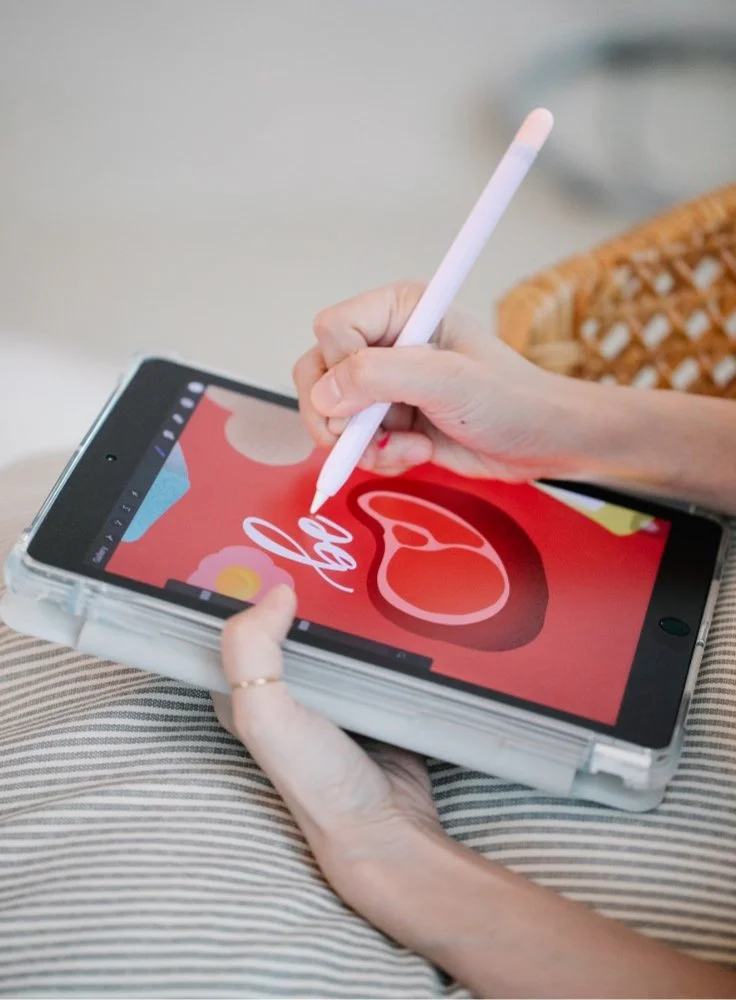
We all feel a little different about kids and technology. I’m fairly wary of it, I admit. I remember being a middle school girl on messenger… not an enriching life experience. I am also one of those resistant strands of human who mumbles under their breath about “progress” and “the good old days” while also scrolling through cat memes. However, being an artist-mom, when my daughter begged me to let her take a turn using my digital pencil on Procreate, the drawing app I use for teaching art lessons, I had to acknowledge the obvious value of early exposure to that skill. She absolutely adores it, and it has genuinely been a worthwhile enriching experience for her.
That is why I am finishing my list with the gift of the Procreate app and an accompanying digital pencil for an iPad. Obviously, you will need an iPad for this gift, so if you do not already have an iPad in your family, that would be the place to start. You can easily find older or refurbished iPads at affordable prices. You don’t need the newest model to make this gift work.

The List
Apple Pencil- When looking for an Apple Pencil, you can find a 1st Generation and a 2nd Generation version. You will want to check the list below and do some research about which pencil is compatible with your iPad.
Procreate App- There are other digital art softwares out there, but Procreate has taken the digital art world by storm. It is user-friendly, CHEAP, ever-expanding and unbelievably diverse. Find the Procreate software in the app store for $9.99.
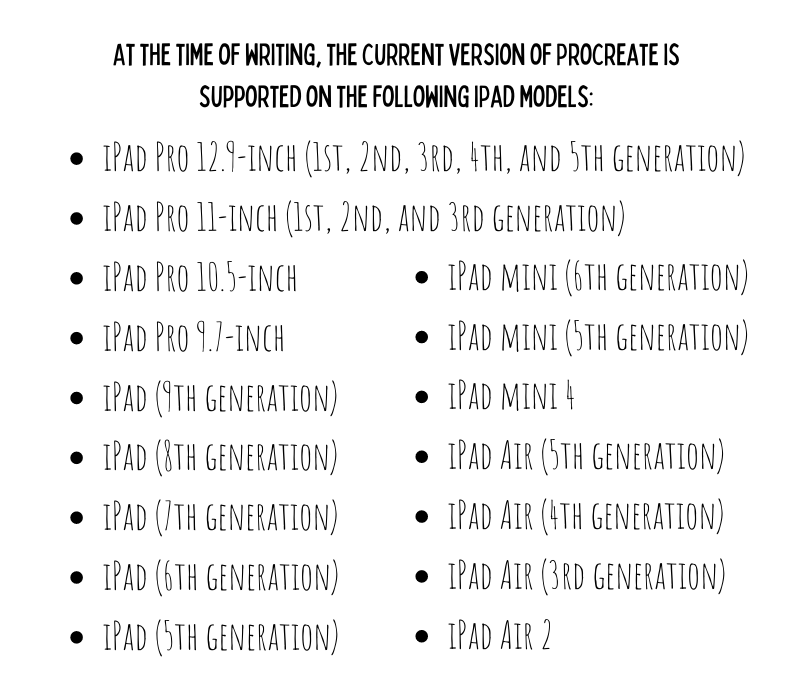
Ipad - Find an iPad that suits your budget. Below I have listed the compatible versions of the iPad from the Procreate website. You will have to do your own research to make sure you’re getting something that will be able to run the Procreate software.
Extras- All you really need to get started are the three things above, but if you get excited about this gift there are tons of Apple pencil or iPad accessories that you can wrap up separately. (All of these are clickable.)
Cute cat pencil cover
All kinds of cute covers (pay attention to which pencils they fit)
Check out these digital mandalas drawn and colored by my four year old. Yeah, you read that right. Four.

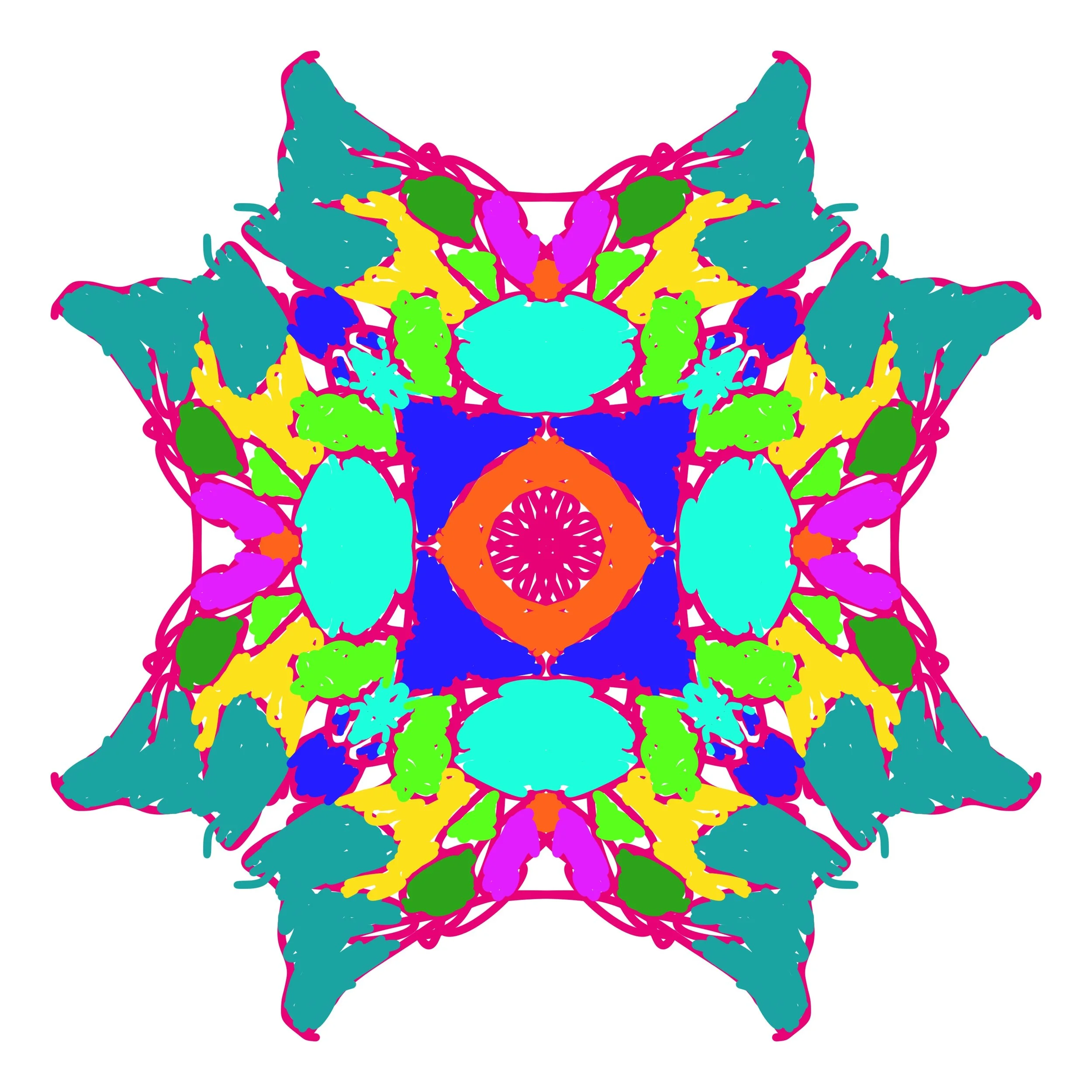


Don’t feel very tech savvy? Don’t worry, you don’t have to teach them yourself.
Try out my private Procreate lessons that are tailored to your child’s needs and interests to help your kids get started using their new gift. Follow this link or click the photo to visit my classes on Outschool.com.
Fear not!
Don’t be fooled by the advanced technology. Your littlest little ones are developing all of the motor skills used for writing and drawing, so just because they won’t be mastering the technology or even the art skills right away, does not mean there is no value to introducing them to the digital medium. This creative software is a new art medium just like any crayon, pencil or paint they try for the first time (and frankly it is probably their future.) In the same way that no one expects a child to master their painting skills at four just because someone put some tempura paint in their hands, you can set the expectation for their output in line with their developmental stage and think of this as a first exposure. Don’t think about it in terms of their knowledge or skill deficit, but rather as the introduction to another new creative experience that they will build on as they grow.
With the right supervision, everything they can do on paper, they can do digitally. It is boundless creativity and a great way to practice their motor-skills with smaller environmental impact (so much less paper waste.)
That’s all folks!

There you have it, a list of gifts your kids will really enjoy that will also develop their creativity, motor skills and who knows— maybe even find a new passion or natural talent. Now you can go reward yourself with the best parts of the season like Christmas cookies, and maybe a hot bath.
Does the holiday gift hubbub make you want to run and hide? What are other ways you’ve found to make the gift-giving a little less chaotic? Comment below!
How to Draw Realistic Birds- Part Two- Final Drawing
Let’s pick up where we left off…
When I talk about the two different stages of a drawing, I will often refer to the sketch stage as the “thinking part” and the drawing stage as, “the artistic part”, because that is essentially what they are. The sketch is the stage of a drawing that forces you to slow down, use your brain as you measure and study and adjust until your drawing is as accurate as possible.

How to Draw Realistic Birds
Welcome back! Don’t forget to sign up to download the How to Draw Realistic Birds- Part Two PDF below.
This post may contain affiliate links. If you use these links to buy something I may earn a commission at no additional cost to you. Thanks.
Part Two- Final Drawing
Welcome to the second part of the How to Draw Realistic Birds tutorial. In part one, we learned how to see and use basic shapes to create a sketch that will be the foundation of our drawing. In this post, we will move on to the “artistic” part of our drawing, and let’s be honest— the part we all came for.
Let’s pick up where we left off…
When I talk about the two different stages of a drawing, I will often refer to the sketch stage as the “thinking part” and the drawing stage as, “the artistic part”, because that is essentially what they are. The sketch is the stage of a drawing that forces you to slow down, use your brain as you measure and study and adjust until your drawing is as accurate as possible.
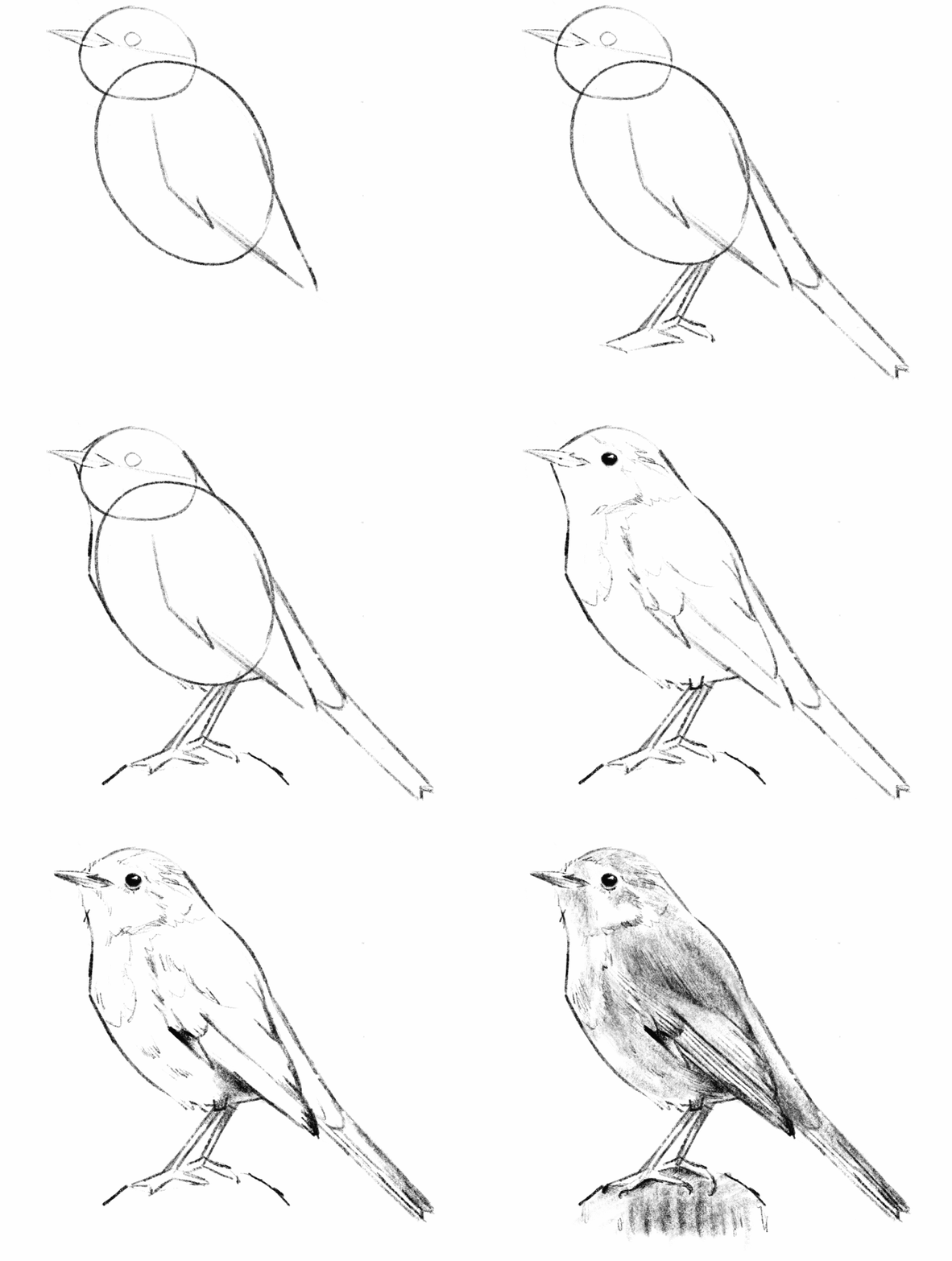
The second stage is the stage of adding shading and details that make it come to life. Before we fully move on, have you adjusted your outline and erased the leftover shapes from our very first few marks? Don’t move on to your shading and details until you’ve checked the shape around the head and neck, checked to see if any of your proportions need adjusting… make any changes that you notice need to be made at this stage. They are harder to adjust later on.

Shading & Details
Shading Practice
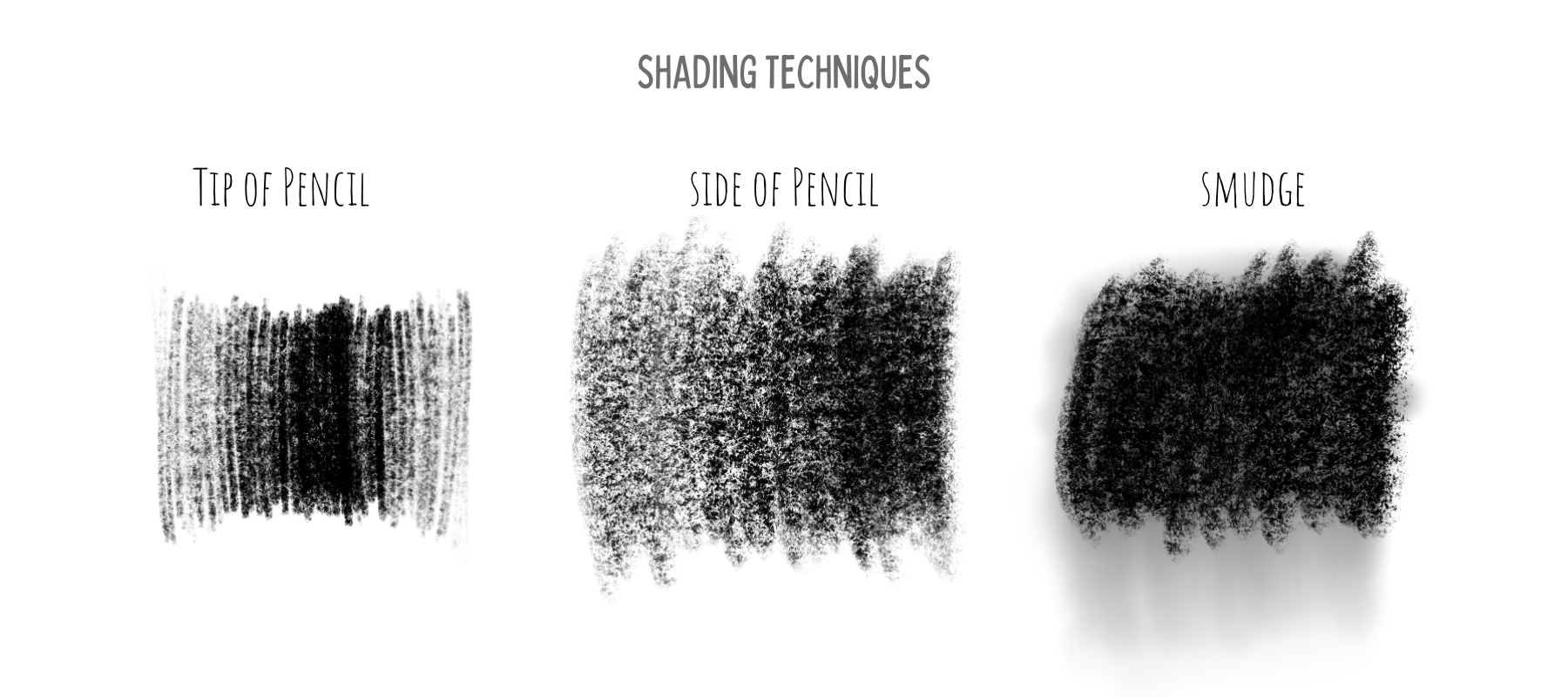
I like to make a few notes about the techniques of shading before we get into the process.
Shading with the tip of your pencil: I’m sure this is obvious, but one method of shading uses the pencil in the same position as when you write, where the tip of the pencil is touching the paper. It may be obvious, but that doesn’t make it easy. Smooth, controlled shading in this way is a skill that has to be developed and practiced. Use this method on a drawing that you plan to spend a lot of time completing (because it is slow), small areas of shading like the eye, and for texture marks.
Shading with the side of your pencil: Another option would be to grip your pencil slightly farther back toward the eraser and apply the graphite with the side of the pencil. Doing so applies the pencil in a softer and faster way. You are still able to create variations of dark and light by pressing harder or going over areas without as much time or delicacy. This is great for drawings which you do not intend to spend a long time completing.
Lastly, and this is somewhat contested among artists, but you can smooth and blend your shading by smudging. I do recommend practicing controlled shading, but it is your drawing. No one cares if you use your finger and soften up those shades. Blend areas of shading by rubbing in circular motions with your finger or tissue. You can even create a smooth gradient by smudging pencil into areas of the drawing that do not have any shading. Use this as a first layer to come back on top with texture or further shading.

Step one: creating contrast
Darkest and lightest areas

There are multiple ways you could go about the next few steps. For the sake of learning, there must be an order, but in your own practice it is more likely that you will find yourself switching between shading and details as it feels right. There is an intuition that you will develop for the process.
Because I believe in some instant gratification as motivation, I recommend starting the shading by finding the very darkest areas of the drawing as well as the lightest. The paper is most likely white and you cannot get whiter than the white of the paper, so in that case we simply leave out the areas of highlight. So those are already taken care of and all you need to do is find the darkest areas.
Squint your eyes at the reference photo. Doing so will take away detail and reveal to you larger shapes of various shades of color. Notice any areas that are so dark when you squint that you can more or less fill them in as dark as possible with your pencil. Some of these areas will not have sharp borders, but they will fade into lighter areas so you will also want to replicate this by fading those darkest areas. Some areas thought may have edges, like the eye.
2. The eye is my favorite place to start because it is quick and very gratifying. To shade in the eye, fill the eye in as dark as possible, but leave out a small organic shape, like a circle, the white of the paper. Even when I don’t see this reflection in the reference photo, I will still add it to the eye. This is because it taps into the way our brain processes shape. As artists, we are putting flat lines and shades onto a paper and attempting to make them look 3-dimensional. This one simple trick will instantly make the drawing look more realistic because the viewer’s brain will recognize it as the highlight that happens on a sphere with a light source. (Step 1. is the last step from the basic sketch.)
3. From here, shade the areas that you have deemed to be the darkest. Because they are areas to shade as densely as you can, you do not have to be quite as deliberate and slow as in areas that require more variation and attention to detail. Immediately, you will see a high contrast in the drawing. By doing this, the form will take shape and it also identifies a value range. By determining the outer limits of our values, it makes it easier to then see the middle values that fall between white and black, or those middle values that will require more deliberate shading (effort).
Step two: suggesting texture
Drawing Feathers
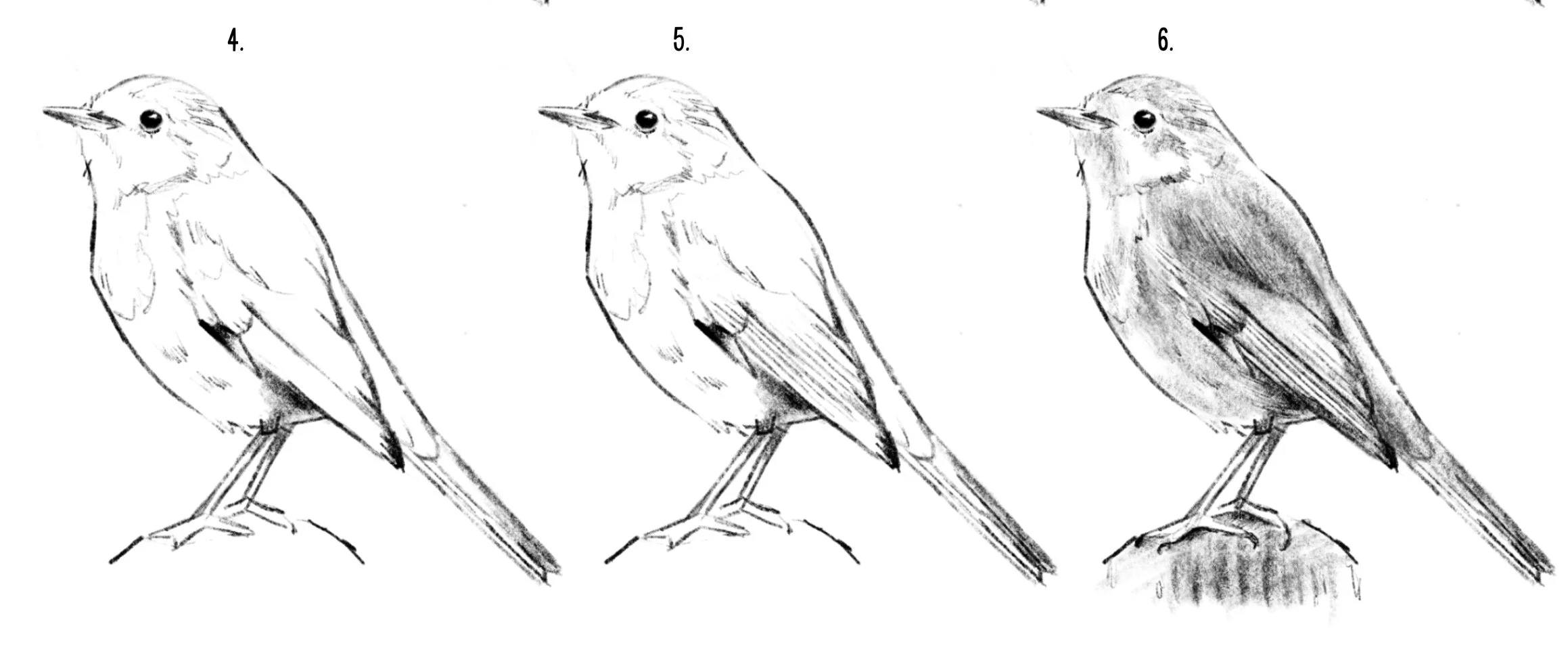
The shading is not complete, but before moving on, let’s take a look at suggesting texture, in this case- feathers.
Often, new artists or young artists will fall into the trap of drawing what they know is there whether they see it or not. A bird is covered in feathers, and most likely, you already know that. So your very intelligent machinery (brain) kicks in and says, “Great. Let’s cover this thing in feathers.” The result will look something like the photo below, and not very realistic. However, by zooming in very closely and tracing what we actually see… you can see clearly that even though there are feathers covering the bird, we do not actually see feathers. What we see are the SHADOWS of the upper layer of feathers being cast on the feathers below. And they often look like hash lines, v or w shapes, squiggles, dots— anything but feathers— but this IS what we see, so this is what you need to draw.
This is called “suggesting” feathers. That is because you are suggesting that they are there without drawing the feather shape. Similarly, you do not need to cover the entire drawing in these lines. You only need to add them to the key areas to suggest the texture. If you struggle to know where to add and where to leave them off, squint again to remove the detail and only add them in some of the areas where you still see the suggestion of them in the reference. You might often see these at the line where the head and body meet, the chest and belly area, and along fluffy edges of the outline.
Step three: Middle values and detail
You are now aware of the skills required to complete your drawing. It is time to go back and forth between these methods and practice your intuition. Look closely at the value in different areas on the body, filling in a smooth value of grey or dark grey in any area of shadow. Use your feather shadow marks to show texture or even to darken areas of shadow. Use light lines for texture in highlight areas and use heavy, dark lines for texture in areas of dark feathers or shadow.
Conclusion
An inspiring artist and naturalist, John Muir Laws, said, “Every drawing is practice for the next.” What he means by this is, if our primary focus each time is on the outcome of our drawing and whether we end with a pretty picture, then sometimes we will succeed but we will likely fail in equal proportion. In the journey toward becoming the artist you would like to be, there will be drawings that you do not enjoy when you are finished. Holding pretty outcomes as your highest aim makes you vulnerable to discouragement, and even vulnerable to giving up. However, if when you sit down to draw you are approaching it as if it is always practice for the next drawing that you do, then regardless of the final product you will have a successful drawing. Each time you intentionally put time and effort into your skill you WILL learn and gain something. You are literally creating new connections in your brain each time you exercise the effort of your skill.
So, more important than all, aim for discovery and get comfortable with the idea of imperfection. That will be your fastest road to art success.
Love all things birds and art?
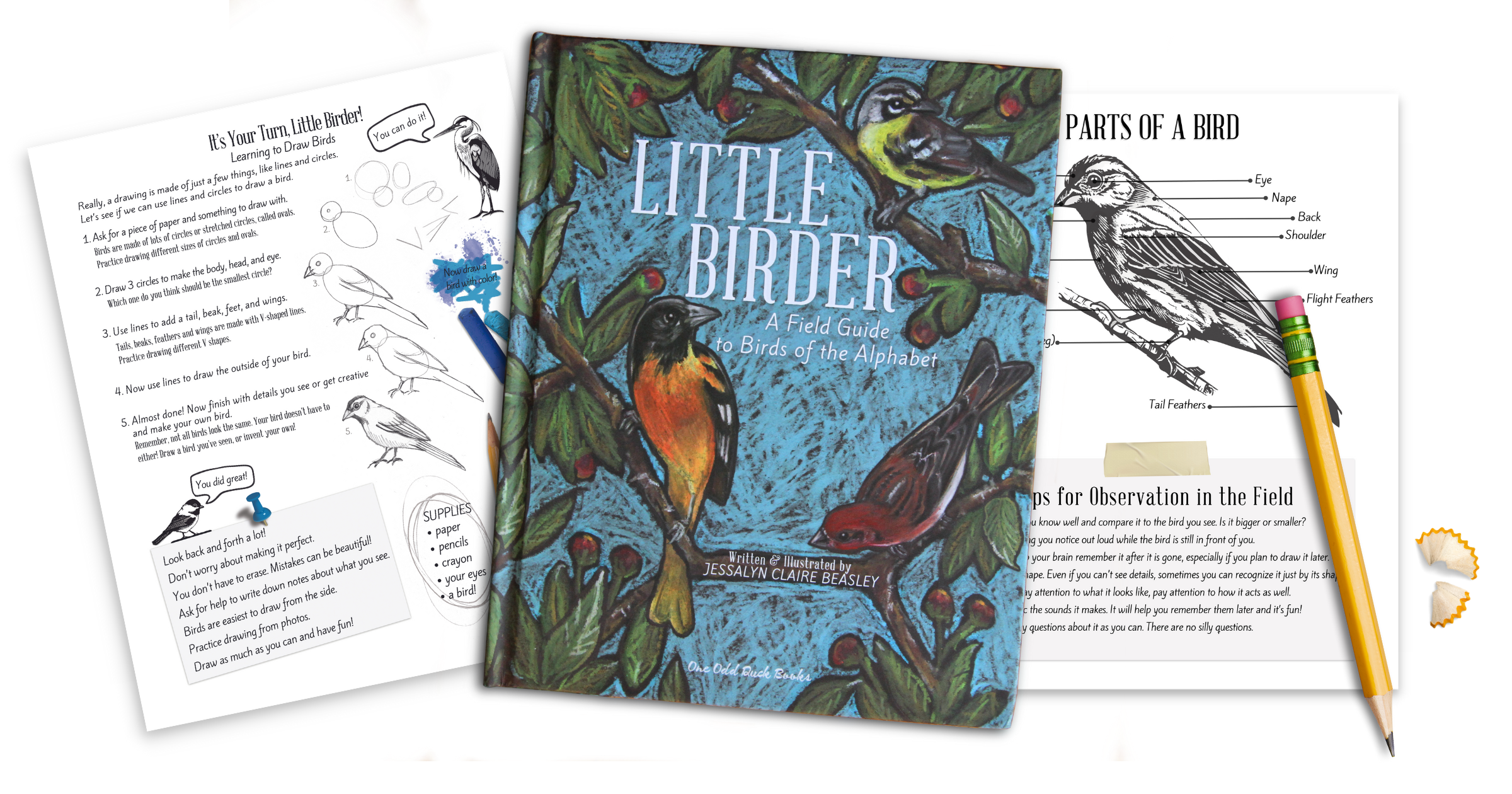
Click the image below to grab a copy of my children’s book, Little Birder: A Field Guide to Birds of the Alphabet.
Click here to read How to Draw Realistic Birds Part-One

Oil pastels are an exciting and versatile art medium. Their convenient versatility can be the aspect of oil pastels that make them confusing to beginners. There are more than a few ways to use oil pastels. Which way is the right way?
The good news is, one of the greatest freedoms in art is that we are not bound to use the mediums in the same way others use them, or for that matter, how they’re intended to be used.
If you can get comfortable with that, then you can have endless success in oil pastel. This post is about making the most of the oil pastel’s ability to be loose, expressive and imperfect. I will introduce you to the benefits of oil pastel in its loose form. At the end of the post you can find the link to an oil pastel tutorial in the style of my children’s book illustrations.